


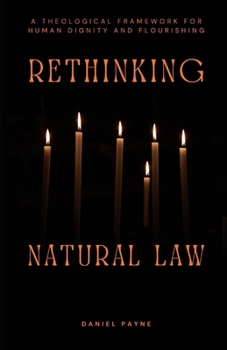
Rethinking Natural Law: A Theological Framework for Human Dignity and Flourishing

For centuries, natural law theory has been invoked both to defend human dignity and to justify exclusion. While civil rights leaders drew on natural law principles to argue for racial equality, the same tradition has been used to marginalize LGBTQ+ individuals, restrict women's roles, and maintain economic inequality. This groundbreaking work reclaims natural law for progressive theology, developing a comprehensive framework that affirms the full dignity of all persons while maintaining fidelity to Christianity's deepest insights.
Daniel Payne argues that authentic natural law reasoning, properly understood, leads not to exclusion but to radical inclusion. Moving beyond biological reductionism to embrace the full complexity of human nature, this progressive approach grounds LGBTQ+ affirmation, racial justice, gender equality, and economic reform in the same principles that have long supported human rights and social justice movements.
Drawing on classical sources from Aquinas to contemporary scholarship, Rethinking Natural Law provides both rigorous theological argumentation and practical guidance for pastoral care, institutional reform, and social advocacy. Payne demonstrates that the choice between traditional faith and progressive inclusion is false-that the tradition's commitment to human flourishing actually demands the full embrace of human diversity.
This book offers hope to those who have felt forced to choose between their deepest convictions and their commitment to justice. It provides intellectual resources for communities seeking to become more inclusive while maintaining their theological integrity. Most importantly, it charts a path toward religious communities and civil societies where all people can flourish as the persons they were created to be.
Essential reading for theologians, pastoral leaders, and anyone interested in the intersection of faith and social justice, this work offers a vision of natural law theology for the twenty-first century-one that honors the tradition's best insights while extending them to embrace the full breadth of human experience.
Customer Reviews
ThriftBooks® and the ThriftBooks® logo are registered trademarks of Thrift Books Global, LLC
