


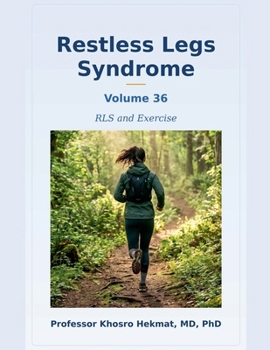
Restless Legs Syndrome - RLS and Exercise

Movement helps instantly. Exercise is still difficult.
Getting up and walking is the only measure that works within seconds, and it is even part of the diagnosis. Yet one in four patients reports that exercise makes their symptoms worse and nothing else. Both experiences are correct, and this volume explains why.
It separates what is constantly confused: relief in the moment and training over weeks. It gives the only tested exercise dose, explains why the time of day matters more than the type of sport, and states openly where research still knows nothing - about strength training, for instance.
At the end stands a programme: how much, what and when, with a weekly plan drawn from the trials that actually worked and a chapter on the first twelve weeks. Including what to do when the exercise makes the nights worse.
WHAT IS IN THE BOOK
- Why movement relieves instantly, and what happens in the body as it does
- The cycle of immobility and deterioration
- Endurance training as the best-studied form
- Strength training, stretching, yoga and Pilates
- Exercise instead of a tablet: the direct comparison
- When exercise makes the legs worse, and the question of timing
- Exercise, iron and the store that runs down
- A weekly plan and the first twelve weeks
WHO THIS BOOK IS FOR
For patients who want to try exercise and do not know how, for everyone who has given up before because it got worse, and for anyone wanting to match their training to the condition.
ABOUT THE SERIES
Volume 36 of 52 in the book series on restless legs syndrome, part "Everyday Life and Self-Help". Every volume can be read on its own. The statements in this volume rest on 140 professional sources, each one listed individually in the reference section.
Customer Reviews
ThriftBooks ® and the ThriftBooks ® logo are registered trademarks of Thrift Books Global, LLC
