


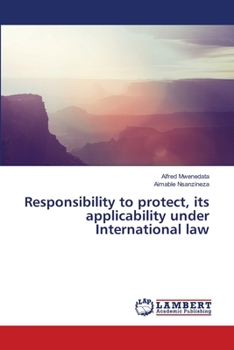
Responsibility to protect, its applicability under International law
No Customer Reviews

The responsibility to protect faces various challenges including inadequate cooperation between the United Nations and Regional organizations, lack of attention to 'hard power', resistance to preventive measures, inadequate rule of law and accountability mechanisms, the recurring tendency to focus on responses to conflict and atrocity crimes instead of prevention, lack of political will and leadership necessary to mobilize atrocity prevention measures, limited access to and allotment of resources to prevention measures as part of a long-term atrocity prevention strategy, etc. The approval of the responsibility to protect entails a significant advance for the international community since the emergence of the debate concerning humanitarian intervention. In effect, the development of coercive and non-coercive measures that can be used by the international community, and the precautionary principles that accompany them in cases where a state has not fulfilled the responsibility to protect its own citizens, turns the principle of sovereignty into a conditional principle, without leaving aside the concerns of states that previously supported the right to non-interference.
Format:Paperback
Language:English
ISBN:6200314381
ISBN13:9786200314383
Release Date:September 2019
Publisher:LAP Lambert Academic Publishing
Length:88 Pages
Weight:0.31 lbs.
Dimensions:0.2" x 6.0" x 9.0"
Related Subjects
LawCustomer Reviews
0 rating
Copyright © 2026 Thriftbooks.com
Terms of Use | Privacy Policy | Do Not Sell/Share My Personal Information | Cookie Policy | Cookie Preferences | Accessibility Statement
ThriftBooks ® and the ThriftBooks ® logo are registered trademarks of Thrift Books Global, LLC
ThriftBooks ® and the ThriftBooks ® logo are registered trademarks of Thrift Books Global, LLC
