


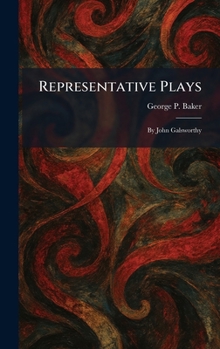
Representative Plays: By John Galsworthy

"Representative Plays by John Galsworthy" is a comprehensive collection of dramatic works by the Nobel Prize-winning author, showcasing his mastery of social realism and the "problem play." John Galsworthy was a pivotal figure in early 20th-century literature, known for his sharp observation of the British class system and his commitment to using the stage as a mirror for social inequities.
This volume, featuring an insightful introduction by George P. Baker, brings together Galsworthy's most impactful theatrical contributions. Through a selection of his most famous plays, the collection examines the moral dilemmas of his era, focusing on themes such as the tension between capital and labor, the rigidity of the English justice system, and the complexities of human morality. Galsworthy's writing is characterized by a profound sense of irony and a deep empathy for characters trapped within unyielding institutional structures.
From the legal critiques found in "Justice" to the industrial conflicts portrayed in "Strife," these works remain essential for students of modern drama and readers interested in the evolution of naturalist theater. "Representative Plays by John Galsworthy" stands as a testament to the author's ability to weave significant social commentary into compelling human narratives, solidifying his legacy in English letters.
This work has been selected by scholars as being culturally important, and is part of the knowledge base of civilization as we know it. This work was reproduced from the original artifact, and remains as true to the original work as possible. Therefore, you may see the original copyright references, library stamps (as most of these works have been housed in our most important libraries around the world), and other notations in the work.
This work is in the public domain in the United States of America, and possibly other nations. Within the United States, you may freely copy and distribute this work, as no entity (individual or corporate) has a copyright on the body of the work.
As a reproduction of a historical artifact, this work may contain missing or blurred pages, poor pictures, errant marks, etc. Scholars believe, and we concur, that this work is important enough to be preserved, reproduced, and made generally available to the public. We appreciate your support of the preservation process, and thank you for being an important part of keeping this knowledge alive and relevant.
Customer Reviews
ThriftBooks ® and the ThriftBooks ® logo are registered trademarks of Thrift Books Global, LLC
