



Select Format
Select Condition 
Book Overview
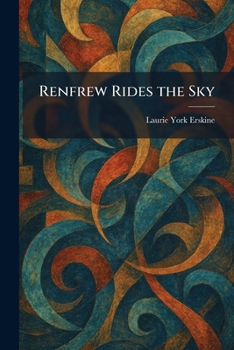
In "Renfrew Rides the Sky", Laurie York Erskine delivers a high-flying adventure featuring the legendary Douglas Renfrew of the Royal Canadian Mounted Police. Set against the breathtaking backdrop of the Canadian wilderness, this installment in the beloved series finds the resolute officer trading his saddle for the cockpit of a biplane. As aviation begins to transform the frontier, Renfrew must master the new technology of flight to pursue justice across vast distances that were once impenetrable.
The story captures a pivotal moment in history where traditional law enforcement meets the daring world of early 20th-century aeronautics. Faced with dangerous criminals and the unforgiving elements of the North, Renfrew demonstrates the unwavering courage and moral integrity that have made him an icon of adventure fiction. Readers will find a gripping blend of mystery, aerial maneuvers, and the rugged spirit of the RCMP.
"Renfrew Rides the Sky" is a classic example of early action-adventure literature, celebrating the heroism and ingenuity required to tame the wilderness. Erskine's vivid prose and attention to technical detail bring the era of pioneer aviation to life, offering a thrilling experience for fans of historical fiction and classic tales of the Mounted Police.
This work has been selected by scholars as being culturally important, and is part of the knowledge base of civilization as we know it. This work was reproduced from the original artifact, and remains as true to the original work as possible. Therefore, you may see the original copyright references, library stamps (as most of these works have been housed in our most important libraries around the world), and other notations in the work.
This work is in the public domain in the United States of America, and possibly other nations. Within the United States, you may freely copy and distribute this work, as no entity (individual or corporate) has a copyright on the body of the work.
As a reproduction of a historical artifact, this work may contain missing or blurred pages, poor pictures, errant marks, etc. Scholars believe, and we concur, that this work is important enough to be preserved, reproduced, and made generally available to the public. We appreciate your support of the preservation process, and thank you for being an important part of keeping this knowledge alive and relevant.
Customer Reviews
ThriftBooks ® and the ThriftBooks ® logo are registered trademarks of Thrift Books Global, LLC
