


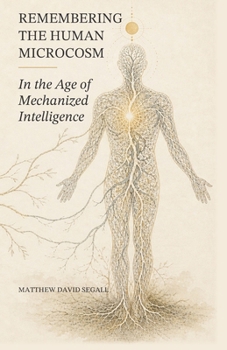
Remembering the Human Microcosm in the Age of Mechanized Intelligence

As technologies of automated computation rapidly transform human culture, we are being urged to believe that human minds are machines and machines are potentially minds. But what if the question of machine consciousness is not a hard problem awaiting better theories and technologies, but malformed-born from a metaphysics that first exiled feeling, purpose, and meaning from nature?
Remembering the Human Microcosm in the Age of Mechanized Intelligence challenges the corporate myth of "artificial intelligence" and the emerging threat of cognitive enclosure: the attempt to meter and monetize our very capacity for thought. Moving from Pope Leo XIV's warnings about AI to the deeper history of media technologies, Segall enlists Georg Hegel, Alfred North Whitehead, and Raymond Ruyer as allies in the resistance against the mechanization of mind.
Hegel's loom clarifies the difference between living Reason and its mechanical imitation. Whitehead reveals Reason not as a private human possession but as a cosmic power that our species intensely concentrates. Ruyer shows why machines may conserve, transmit, and recombine information without originating meaning.
Yet this is no technophobic call to smash the loom. Human intelligence has always been artificial-shaped and augmented by alphabets, printing presses, and now, large language models. The challenge is to ensure that our technologies become amplifiers rather than amputators of consciousness.
Recovering the ancient image of the human being as microcosm with sincere, metamodern irony, Segall argues that we are the place where cosmic evolution becomes reflexively aware of itself. Automated computation can help us sort the mountains of information we have accumulated. But only a living mind can know what any of it means, or why it matters.
Customer Reviews
ThriftBooks ® and the ThriftBooks ® logo are registered trademarks of Thrift Books Global, LLC
