


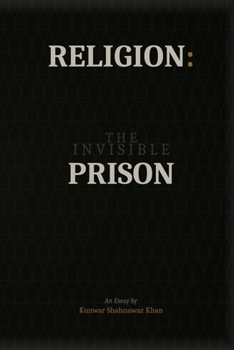
Religion: The Invisible Prison

You know the feeling. The prayers said aloud while the interior stays silent. The rituals performed with every outward appearance of sincerity while something quieter runs beneath. The identity inhabited in public and quietly questioned in private. You assumed this was personal - a failure of faith, a weakness of will, a peculiarity of your own restless mind.
What if it isn't?
What if that gap - between the performance and the person, between the public affirmation and the private frequency - is not a failure of the individual but a structural consequence of the institution itself?
Religion: The Invisible Prison examines organised religion not devotionally but structurally - as a social institution whose architecture, examined carefully, begins to resemble something unexpectedly familiar. It does not ask whether religion is true or false, good or bad, consoling or cruel. It asks something narrower and more unsettling: what does it actually do - to the self, to the interior, to the freedom that even the most total physical confinement cannot reach?
The answer is not a rejection or advocacy of religious life. It is an invitation to see clearly. And clarity, once arrived at, cannot be undone.
Customer Reviews
ThriftBooks ® and the ThriftBooks ® logo are registered trademarks of Thrift Books Global, LLC
