


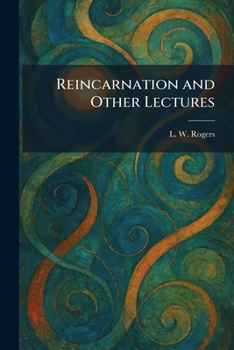
Reincarnation and Other Lectures

Select Format
Select Condition 
Book Overview
"Reincarnation and Other Lectures" is an illuminating collection of spiritual discourses that explores the profound mysteries of the human soul and the mechanics of the universe. Written by L.W. Rogers, a prominent figure in the theosophical movement, this work provides a systematic examination of the doctrine of rebirth and its role in human evolution.
The lectures delve into essential metaphysical themes, including the law of cause and effect-known as karma-and the logical necessity of multiple lifetimes for the soul's development. Rogers addresses common questions and misconceptions about the afterlife, presenting theosophy as a practical philosophy that reconciles scientific thought with spiritual intuition. Through clear and persuasive prose, the author discusses the purpose of physical existence and the ultimate destiny of consciousness.
This volume serves as both a compelling introduction for those new to occult philosophy and a valuable resource for seasoned seekers of esoteric wisdom. By focusing on the continuity of life beyond the physical body, "Reincarnation and Other Lectures" offers a hopeful and expansive vision of the human experience, emphasizing the individual's power to shape their future through moral and intellectual growth.
This work has been selected by scholars as being culturally important, and is part of the knowledge base of civilization as we know it. This work was reproduced from the original artifact, and remains as true to the original work as possible. Therefore, you may see the original copyright references, library stamps (as most of these works have been housed in our most important libraries around the world), and other notations in the work.
This work is in the public domain in the United States of America, and possibly other nations. Within the United States, you may freely copy and distribute this work, as no entity (individual or corporate) has a copyright on the body of the work.
As a reproduction of a historical artifact, this work may contain missing or blurred pages, poor pictures, errant marks, etc. Scholars believe, and we concur, that this work is important enough to be preserved, reproduced, and made generally available to the public. We appreciate your support of the preservation process, and thank you for being an important part of keeping this knowledge alive and relevant.
Customer Reviews
ThriftBooks ® and the ThriftBooks ® logo are registered trademarks of Thrift Books Global, LLC
