


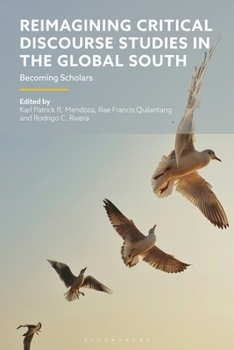
Reimagining Critical Discourse Studies in the Global South: Becoming Scholars

This reflexive and interdisciplinary volume reimagines critical discourse studies (CDS) from and through the Global South by shifting attention from critique as a portable methodological toolkit to critique as scholarly formation. It examines how relational critique is learned through supervision, pedagogy, writing, professional practice, vernacular theorizing, and participation in unequal institutions of knowledge.
Grounded primarily in Philippine experiences and connected to wider African and Southeast Asian contexts, its chapters explore relational judgment, epistemic hesitation, multimodality, journalism, political communication, AI governance, and generative AI. Together, they show that critique depends not only on exposing ideology and domination but also on cultivating judgment, reflexivity, responsibility, and the capacity to theorize from situated experience. Concepts drawn from local moral and communicative worlds demonstrate how Global South knowledge production can extend established critical traditions rather than merely apply them. The collection concludes that scholarly becoming is never an individual or completed achievement: it unfolds through relationships, infrastructures, and contested conditions of recognition. By placing epistemic justice and intellectual formation at the center of Critical Discourse Studies, the book offers a relational account of how scholars learn to produce accountable knowledge amid institutional inequality and technological change.
An essential resource for discourse analysts, qualitative researchers, and Global South educators, Reimagining Critical Discourse Studies in the Global South bridges CDS, critical pedagogy, and decolonial thought to imagine new futures for academic practice.
Related Subjects
Language ArtsCustomer Reviews
ThriftBooks ® and the ThriftBooks ® logo are registered trademarks of Thrift Books Global, LLC
