


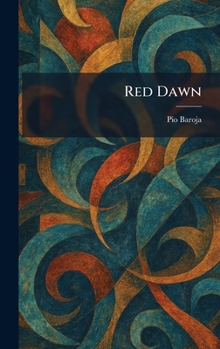
Red Dawn

In "Red Dawn", the final installment of the acclaimed trilogy "The Struggle for Life", Pio Baroja presents a stark and visceral portrayal of the anarchist movement in Madrid at the turn of the twentieth century. The narrative follows the protagonist as he navigates the turbulent social and political undercurrents of the Spanish capital, witnessing the desperation and idealism of those living on the fringes of society.
Baroja's mastery of urban realism shines as he explores themes of poverty, social inequality, and the burgeoning revolutionary fervor that gripped the working class. The novel delves into the philosophical and practical challenges of the anarchist cause, depicting a world where personal struggle is inextricably linked to the broader collective fight for justice. Through vivid character studies and atmospheric descriptions of Madrid's backstreets and secret meeting halls, "Red Dawn" captures a pivotal moment in history with uncompromising honesty.
This work stands as a testament to Baroja's significant influence on modern literature, offering a compelling look at the human condition amidst profound social upheaval. It remains an essential exploration of political radicalism and the enduring quest for dignity within an indifferent urban landscape.
This work has been selected by scholars as being culturally important, and is part of the knowledge base of civilization as we know it. This work was reproduced from the original artifact, and remains as true to the original work as possible. Therefore, you may see the original copyright references, library stamps (as most of these works have been housed in our most important libraries around the world), and other notations in the work.
This work is in the public domain in the United States of America, and possibly other nations. Within the United States, you may freely copy and distribute this work, as no entity (individual or corporate) has a copyright on the body of the work.
As a reproduction of a historical artifact, this work may contain missing or blurred pages, poor pictures, errant marks, etc. Scholars believe, and we concur, that this work is important enough to be preserved, reproduced, and made generally available to the public. We appreciate your support of the preservation process, and thank you for being an important part of keeping this knowledge alive and relevant.
Customer Reviews
ThriftBooks ® and the ThriftBooks ® logo are registered trademarks of Thrift Books Global, LLC
