


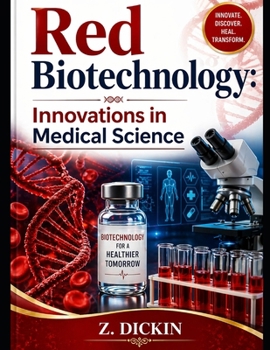
Red Biotechnology: Innovations in Medical Science
No Customer Reviews

Biotechnology has emerged as one of the most transformative scientific disciplines of the modern era. By combining principles from biology, chemistry, genetics, and engineering, biotechnology has opened new avenues for improving human life and addressing some of the most pressing medical challenges. Among the various branches of biotechnology, Red Biotechnology plays a particularly significant role because it focuses on the application of biotechnology in medicine and healthcare.
The primary goal of red biotechnology is to develop innovative approaches for diagnosing, preventing, and treating diseases. Over the past few decades, rapid progress in molecular biology, genetics, and biomedical engineering has revolutionized the field of medicine. Modern biotechnology has made it possible to produce life-saving drugs, develop advanced diagnostic tools, and explore new therapies for previously untreatable diseases.
One of the most remarkable achievements in biotechnology was the discovery of the structure of DNA by James Watson and Francis Crick. This breakthrough laid the foundation for understanding genetic information and opened the door to numerous scientific innovations. Later developments, such as recombinant DNA technology and genome sequencing, further accelerated research in biotechnology and medicine.
The completion of the Human Genome Project marked another milestone in the history of biotechnology. By mapping the entire human genome, scientists gained valuable insights into genetic diseases and the molecular basis of many health conditions. This knowledge has enabled researchers to design targeted therapies and improve the effectiveness of medical treatments.
Today, red biotechnology is responsible for many of the medical advances that improve the quality of life for millions of people worldwide. Biotechnology-based medicines, also known as biopharmaceuticals, include vaccines, recombinant proteins, and monoclonal antibodies. For example, the large-scale production of Insulin through recombinant DNA technology has significantly improved the management of diabetes and has benefited millions of patients globally.
In addition to therapeutic products, biotechnology has also transformed diagnostic methods. Modern diagnostic techniques allow scientists and physicians to detect diseases quickly and accurately, often before symptoms appear. Early detection plays a crucial role in effective treatment and disease prevention.
Another important development in medical biotechnology is gene therapy. This innovative approach involves correcting or replacing defective genes to treat genetic disorders. Advances in genome editing technologies such as CRISPR-Cas9 have provided researchers with powerful tools to modify DNA with unprecedented precision. These technologies hold great promise for treating inherited diseases and improving human health.
Stem cell research and regenerative medicine also represent exciting areas within red biotechnology. Scientists are exploring ways to repair or replace damaged tissues and organs using stem cells and tissue engineering techniques. These developments may eventually provide solutions for conditions that currently have limited treatment options.
The integration of biotechnology with emerging technologies such as artificial intelligence, nanotechnology, and bioinformatics is further expanding the possibilities of medical research. These interdisciplinary approaches are enabling scientists to analyze complex biological data, design new drugs, and develop innovative medical devices.
Despite its many benefits, red biotechnology also raises important ethical, social, and regulatory questions. Issues related to genetic modification, stem cell research, and data privacy require careful consideration.
The primary goal of red biotechnology is to develop innovative approaches for diagnosing, preventing, and treating diseases. Over the past few decades, rapid progress in molecular biology, genetics, and biomedical engineering has revolutionized the field of medicine. Modern biotechnology has made it possible to produce life-saving drugs, develop advanced diagnostic tools, and explore new therapies for previously untreatable diseases.
One of the most remarkable achievements in biotechnology was the discovery of the structure of DNA by James Watson and Francis Crick. This breakthrough laid the foundation for understanding genetic information and opened the door to numerous scientific innovations. Later developments, such as recombinant DNA technology and genome sequencing, further accelerated research in biotechnology and medicine.
The completion of the Human Genome Project marked another milestone in the history of biotechnology. By mapping the entire human genome, scientists gained valuable insights into genetic diseases and the molecular basis of many health conditions. This knowledge has enabled researchers to design targeted therapies and improve the effectiveness of medical treatments.
Today, red biotechnology is responsible for many of the medical advances that improve the quality of life for millions of people worldwide. Biotechnology-based medicines, also known as biopharmaceuticals, include vaccines, recombinant proteins, and monoclonal antibodies. For example, the large-scale production of Insulin through recombinant DNA technology has significantly improved the management of diabetes and has benefited millions of patients globally.
In addition to therapeutic products, biotechnology has also transformed diagnostic methods. Modern diagnostic techniques allow scientists and physicians to detect diseases quickly and accurately, often before symptoms appear. Early detection plays a crucial role in effective treatment and disease prevention.
Another important development in medical biotechnology is gene therapy. This innovative approach involves correcting or replacing defective genes to treat genetic disorders. Advances in genome editing technologies such as CRISPR-Cas9 have provided researchers with powerful tools to modify DNA with unprecedented precision. These technologies hold great promise for treating inherited diseases and improving human health.
Stem cell research and regenerative medicine also represent exciting areas within red biotechnology. Scientists are exploring ways to repair or replace damaged tissues and organs using stem cells and tissue engineering techniques. These developments may eventually provide solutions for conditions that currently have limited treatment options.
The integration of biotechnology with emerging technologies such as artificial intelligence, nanotechnology, and bioinformatics is further expanding the possibilities of medical research. These interdisciplinary approaches are enabling scientists to analyze complex biological data, design new drugs, and develop innovative medical devices.
Despite its many benefits, red biotechnology also raises important ethical, social, and regulatory questions. Issues related to genetic modification, stem cell research, and data privacy require careful consideration.
Format:Paperback
Language:English
ISBN:B0GYHT7RRD
ISBN13:9798258706171
Release Date:April 2026
Publisher:Independently Published
Length:162 Pages
Weight:0.86 lbs.
Dimensions:0.3" x 8.5" x 11.0"
Customer Reviews
0 rating
Copyright © 2026 Thriftbooks.com
Terms of Use | Privacy Policy | Do Not Sell/Share My Personal Information | Cookie Policy | Cookie Preferences | Accessibility Statement
ThriftBooks ® and the ThriftBooks ® logo are registered trademarks of Thrift Books Global, LLC
ThriftBooks ® and the ThriftBooks ® logo are registered trademarks of Thrift Books Global, LLC
