


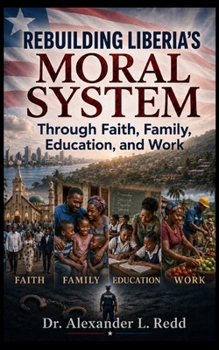
Rebuilding Liberia's Moral System Through Faith, Family, Education, and Work

A nation cannot police its way into moral health. It has to rebuild the conscience that got lost along the way.
Somewhere in Liberia tonight, a mother is locking her door with a piece of wire because no one ever taught her son what it means to owe something to the people around him. Ask most Liberians what broke their country, and they will list corrupt officials, broken roads, and a police force stretched too thin to protect anyone well. Every complaint is true. None of them, alone, explains the ache underneath. Treat the symptoms long enough, and a nation can convince itself it has found a cure, right up until the next crisis proves otherwise.
In Rebuilding Liberia's Moral System, pastor, theologian, and former Liberian journalist Dr. Alexander L. Redd offers an answer most political conversations never reach. A constitution can organize a government. It cannot produce a good man or a good woman. That work belongs to something older and deeper, and this book names it plainly before turning to the harder task of rebuilding it.
Drawing on decades of pastoral care, hard journalism, and an unshaken love for his homeland, Dr. Redd traces Liberia's deepest crisis back to four institutions quietly failing to do the work only they can do. The family, meant to be a child's first government, teaching what power is for and whom it must serve. The school, meant to form citizens instead of merely producing candidates for exams no one polices honestly. The workplace and marketplace, meant to reward integrity instead of quietly training a generation to believe that honest effort rarely pays. And the church and mosque, meant to shape character in a nation crowded with worship yet starved of the fruit that true worship should produce.
Chapter by chapter, moving from Liberia's past through its present and into a hopeful future, Dr. Redd walks through each institution with unflinching honesty. He tells the truth about mission schools that once built leaders and left others behind, about parents pulled apart by war and economic pressure, about young clerks who learn more from a supervisor's corruption than any classroom ever taught them, and about a police force asked to be substitute parents, teachers, and moral authorities for a Republic that quietly handed off its own responsibilities. Along the way, he pushes past the easy, comfortable answers, the kind that blame only politicians or only poverty, and asks Liberians to look at what they are actually building in the people closest to them.
This is not a book that stops at diagnosis. Every chapter closes with a real, workable path forward, so that one day the police can return to their proper, limited job instead of standing in for every parent, teacher, and pastor the nation forgot to raise.
For anyone who loves Liberia enough to want more for her, or who recognizes this same quiet collapse of conscience unfolding in their own country, this book will not let you look away. It offers something rarer than blame. It offers a plan, and it offers hope.
Customer Reviews
ThriftBooks ® and the ThriftBooks ® logo are registered trademarks of Thrift Books Global, LLC
