


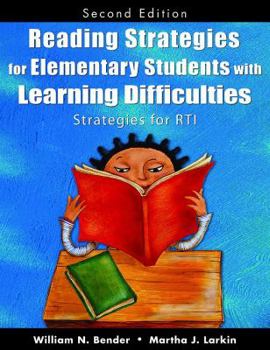
Reading Strategies for Elementary Students with Learning Difficulties: Strategies for RTI

Select Format
Select Condition 
Book Overview
"The authors have taken a huge amount of research and information, digested it, and organized it into clearly arranged, practical, readable, usable work. This book balances information, suggestions, and examples with reflective exercises that are practical and valuable. It also gives tons of Web sites and resources for more useful tools and tips."
--Mary Guerrette, Director of Special Education
Maine School Administrative District #1, ME
A one-stop source of proven reading strategies to use with RTI
This second edition of a best-selling resource helps general and special education teachers integrate approaches for strengthening reading skills with procedures for Response to Intervention (RTI). Based on the latest research, these practical instructional strategies can be used with students with learning disabilities of any kind as well as with any student who struggles in reading.
This resource provides highly effective strategies for elementary and middle school reading instruction and includes RTI case studies that show how the strategies work within an RTI framework. Focusing on the critical areas of reading instruction identified in the National Reading Panel′s report, this book helps educators:
Implement early literacy and brain-compatible reading instruction and assessmentDevelop phonological and phonemic instructionPromote effective progress monitoring in reading Build vocabulary and reading fluencyBoost reading comprehension, especially in the content areasThis vital resource provides teachers with a ready reference of interventions to provide targeted reading instruction for students with learning difficulties.
Customer Reviews
ThriftBooks ® and the ThriftBooks ® logo are registered trademarks of Thrift Books Global, LLC
