


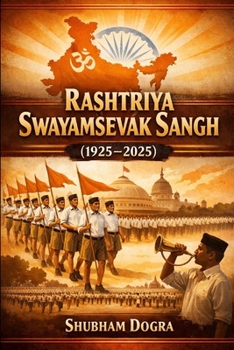
Rashtriya Swayamsevak Sangh: (1925–2025)

Founded in 1925, the Rashtriya Swayamsevak Sangh (RSS) has grown into one of the most influential socio-cultural organizations in modern India. Over the course of a hundred years, it has shaped national discourse, inspired generations of volunteers, and played a significant role in the country's social, cultural, and ideological evolution.
Rashtriya Swayamsevak Sangh (1925-2025) presents a comprehensive and structured exploration of the organization's century-long journey. The book traces the RSS from its origins in colonial India to its expansion across independent India, examining its philosophy, organizational framework, discipline-based training system, and its emphasis on cultural nationalism and character-building.
This work places the RSS within its historical context, highlighting key milestones, challenges, transformations, and contributions to society. Without rhetoric or sensationalism, the book seeks to document how the Sangh developed as a grassroots movement, how it sustained continuity through changing political climates, and how its ideas influenced social service, education, and national thought.
Written in a clear and accessible style, this book is intended for students, researchers, general readers, and anyone seeking to understand the historical roots and long-term impact of the RSS. Rather than advocacy or opposition, the focus remains on documentation, context, and informed understanding.
Rashtriya Swayamsevak Sangh (1925-2025) stands as a centenary reflection on an organization that has left a deep and lasting imprint on India's socio-cultural landscape.
Customer Reviews
ThriftBooks® and the ThriftBooks® logo are registered trademarks of Thrift Books Global, LLC
