


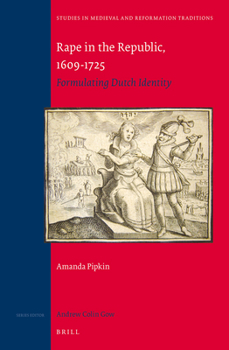
Rape in the Republic, 1609-1725: Formulating Dutch Identity
No Customer Reviews

This book reveals the fundamental role rape played in promoting Dutch solidarity from 1609-1725. Through the identification of particular enemies, it directed attention away from competing regional, religious, and political loyalties. Patriotic Protestant authors highlighted atrocities committed by the Spanish and lower-class criminals. They conversely cast Dutch men as protectors of their wives and daughters - an appealing characterization that allowed the Dutch to take pride in a sense of moral superiority and justify the Dutch Revolt. After the conclusion of peace with Spain in 1648, marginalized authors, including Catholic priests and literary women, employed depictions of rape to subtly advance their own agendas without undermining political stability. Rape was thus essential in the development and preservation of a common identity that paved the way for the Dutch defeat of the mighty Spanish empire and their rise to economic pre-eminence in Europe.
Format:Hardcover
Language:English
ISBN:9004256652
ISBN13:9789004256651
Release Date:August 2013
Publisher:Brill
Length:272 Pages
Weight:1.27 lbs.
Dimensions:0.7" x 6.1" x 9.2"
Customer Reviews
0 rating
Copyright © 2026 Thriftbooks.com
Terms of Use | Privacy Policy | Do Not Sell/Share My Personal Information | Cookie Policy | Cookie Preferences | Accessibility Statement
ThriftBooks ® and the ThriftBooks ® logo are registered trademarks of Thrift Books Global, LLC
ThriftBooks ® and the ThriftBooks ® logo are registered trademarks of Thrift Books Global, LLC
