


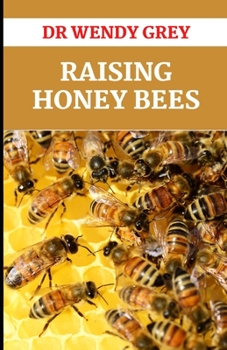
Raising Honey Bees: Everything You Need to Know to Start Your First Hive and Making Your Hive Thrive
No Customer Reviews

RAISING BEES AND CREATING A PROFITABLE HONEY BUSINESS Some assume beekeeping is a relatively easy hobby after all, bees can make honey without our help. But even with the understanding that owning a colony is a huge responsibility, it took years to learn how best to keep her bees well-protected, healthy, and thriving. Poorly maintained hives can turn weak or fall victim to infestations, and when not given enough room to produce bees swarm to find a larger home, a huge hazard both to neighbors and your honey harvest. If a colony is properly cared for protected from predators, given enough space to produce honey, and left enough honey to eat over the winter you can expect your bees to thrive. And when a colony is healthy, it does magical things, like pollinate our vegetable gardens and make anywhere between 50 and 250 pounds of honey a year. Yes, bees can travel for what they need. But just like us, bees can tire out from long commutes, and they might lose their competitive edge to other colonies. Putting bees through that much work isn't that fair to the tiny workers, and in dense city areas with limited flora, beekeepers are noting how the rise of urban beekeeping diminishes their hives' honey production. if you've covered your rooftop with flowering plants or live in a suburban or rural area with plenty of happily growing things, you're well on your way to a healthy hive. If you also have enough space for a small body of water, a birdbath, or even a few buckets for bees to drink from, you're even closer. And if you have propolis-producing trees around for bees to harvest and patch up their hive, and at least a ten-foot flying path for which they can get in and out of their home, you're golden.
Bees need to be tamed a bit before moving homes, hive inspections, and frame removal for honey extraction. To do so, most beekeepers use a small smoker: a small can with bellows attached where newspaper, dried leaves and twigs ignite and get puffed into the hive, calming the bees. A hat with veil, protective jacket, and long gloves. Obviously you want to keep stinging to a minimum, and these suits are made for both protection and flexibility. A hive tool: Sort of like a crow bar, the hive tool helps gently separate the hive lid or frames that have been sealed with propolis. There are several breeds of honeybee; some produce more honey while others are more resistant to illness.
You can't just set up your hive, walk away for a few months, and expect to harvest pound after pound of perfect honey come autumn. During weekly hive inspections, beekeepers check for healthy egg production, pest contamination, and small burrowing animals. Beetles, moths, mites and fungus: These are the most dangerous predators, since they sneak into a hive when beekeepers aren't looking. Laying eggs or feeding off larvae, these various bee-killers can wipe out a colony, and ways to battle them are varied and plentiful. Want to learn more? Read This Book By Dr. Wendy GreyFormat:Paperback
Language:English
ISBN:B0BCXWRWFM
ISBN13:9798847970914
Release Date:January 1
Publisher:Independently Published
Length:98 Pages
Weight:0.27 lbs.
Dimensions:0.2" x 5.5" x 8.5"
Customer Reviews
0 rating
Copyright © 2026 Thriftbooks.com Terms of Use
| Privacy Policy | Do Not
Sell/Share My Personal Information | Cookie Policy | Cookie Preferences | Accessibility Statement
ThriftBooks® and the ThriftBooks® logo are registered trademarks of Thrift Books Global, LLC
ThriftBooks® and the ThriftBooks® logo are registered trademarks of Thrift Books Global, LLC
