


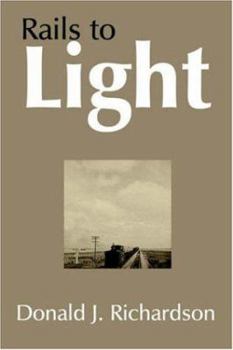
Rails to Light

Rails to Light came about as a result of my reading the book Riding the Rails. I was appalled by the teenagers' experiences, and I wondered what such experiences would do to an individual. Reading... This description may be from another edition of this product.
Format:Paperback
Language:English
ISBN:1420830392
ISBN13:9781420830392
Release Date:March 2005
Publisher:Authorhouse
Length:132 Pages
Weight:0.45 lbs.
Dimensions:0.3" x 6.0" x 9.0"
Related Subjects
HistoryCustomer Reviews
1 rating
Epiphany in a Boxcar
Published by Thriftbooks.com User , 20 years ago
Don Richardson's attractively printed second book Rails to Light is attentively written for teenagers. The story is a glance backward to the difficult 1930s. It describes riding on freight trains and tells how a fifteen-year-old boy at that time may have felt, thought, and acted when confronted by conflict. Spenser, the young hero, could be a son of the family Richardson created for his first book Dust in the Wind. After the terrible drought in Kansas, in the author's interesting second book, the Williams family faces the hard times of the Depression. It is darkest reality through which the boy begins to reason. This time, in Rails to Light, it is not rabbits which are killed but the innocence of a teenager. Spenser is running away from the repulsive hands of Father Mulcahey, and he is also looking for a job because his father has lost his. Spenser will be a tramp-not a hobo or worse, a bum-the difference is well explained. Spenser leaves the apparently clean community in which he served as an altar boy kneeling between white-garmented priests and listening to sermons about chastity to find himself sitting among stinking people "in the jungle," eating "slumgulion" cooked by Old Dan, a black man whose decency, despite his unwashed body, is a light in the boy's new world. Spenser learns that there is not one "sir" resting around the campfires; all men are equally waiting for the next train. He copes with death when his friend Hank misses "catching out" and falls under the train. He experiences the rejection of organized religion when his dusty tramp clothes offend an usher at the church door. The adventure Spenser has read about and hoped for-riding the rails toward romance-changes to a risky undertaking. Yes, there is beauty, too, looking at sunsets and listening the "click of the wheels on the rails" but, he ponders, would a college degree not give more confidence? The terrible loneliness on the road allows him to observe others and reflect that to share with each other-to "lighten each other's load"--must be a way of combating loneliness. After of months of searching for jobs and food, weary from jumping on and off trains, Spenser has suppressed his thoughts about Father Mulcahey. But one day, sitting inside a boxcar and forced to watch the business of "makin' love" for money, he revisits his disgust about the situation in the rectory. In an ill-lighted boxcar, among bums and tramps, he has his epiphany: not that he behaves sinfully when he enjoys changes in his aroused body, but that somebody made him feel guilty. Suddenly there is Light inside him, and he knows that he must do something to keep it there. Don Richardson combines fiction with the truth behind many contemporary photographs in his excellently researched story. The authentic photos give his book a place beside historical novels. The story is suitable to be read to younger teenagers, or in youth groups to initiate discussions. The author writes for our teenag
Copyright © 2026 Thriftbooks.com Terms of Use
| Privacy Policy | Do Not
Sell/Share My Personal Information | Cookie Policy | Cookie Preferences | Accessibility Statement
ThriftBooks® and the ThriftBooks® logo are registered trademarks of Thrift Books Global, LLC
ThriftBooks® and the ThriftBooks® logo are registered trademarks of Thrift Books Global, LLC
