
Skip to content
Scan a barcode
Scan
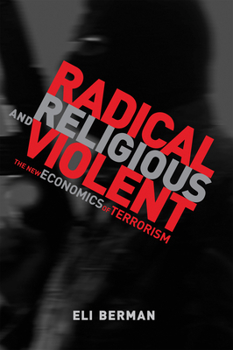
Hardcover Radical, Religious, and Violent: The New Economics of Terrorism Book

ISBN: 0262026406

ISBN13: 9780262026406

Radical, Religious, and Violent: The New Economics of Terrorism

Select Format

Select Condition ThriftBooks Help Icon

Recommended

Format: Hardcover

Condition: Good

$15.89
Almost Gone, Only 1 Left!
Save to List

Book Overview

How do radical religious sects run such deadly terrorist organizations? Hezbollah, Hamas, Lashkar-e-Taiba, and the Taliban all began as religious groups dedicated to piety and charity. Yet once they turned to violence, they became horribly potent, executing campaigns of terrorism deadlier than those of their secular rivals. In Radical, Religious, and Violent , Eli Berman approaches the question using the economics of organizations. He first dispels some myths: radical religious terrorists are not generally motivated by the promise of rewards in the afterlife (including the infamous seventy-two virgins) or even by religious ideas in general. He argues that these terrorists (even suicide terrorists) are best understood as rational altruists seeking to help their own communities. Yet despite the vast pool of potential recruits -- young altruists who feel their communities are repressed or endangered -- there are less than a dozen highly lethal terrorist organizations in the world capable of sustained and coordinated violence that threatens governments and makes hundreds of millions of civilians hesitate before boarding an airplane. What's special about these organizations, and why are most of their followers religious radicals? Drawing on parallel research on radical religious Jews, Christians, and Muslims, Berman shows that the most lethal terrorist groups have a common characteristic: their leaders have found a way to control defection. Hezbollah, Hamas, and the Taliban, for example, built loyalty and cohesion by means of mutual aid, weeding out "free riders" and producing a cadre of members they could rely on. The secret of their deadly effectiveness lies in their resilience and cohesion when incentives to defect are strong.These insights suggest that provision of basic social services by competent governments adds a critical, nonviolent component to counterterrorism strategies. It undermines the violent potential of radical religious organizations without disturbing free religious practice, being drawn into theological debates with Jihadists, or endangering civilians.

Customer Reviews

5 ratings

Understanding some of the motivations for terrorism.

This book is a look at the economic motivators and limiters in violent organisations. It is a refreshing look beyond the rhetoric of terrorism and into the forces that allow clubs, especially religious clubs, to become violent. The authors also then look at how these forces can be diverted and dissipated so that clubs are unlikely to become violent. The conclusions are very similar to what I learned in Socialism 101 as what a socialist society should try to achieve. Good governance, government provision of adequate services to all (health, education, housing, etc), and basically creating a society where everyone feels they have a stake. There is a lot of material on the Israel/Palestine conflict, largely because there is more data on this conflict than others. This does not detract from the conclusions. On the contrary, it would be good to see the authors insights applied on the ground in this part of the world. There are a few errors in the graphs and diagrams but these are minor and do not detract from the whole. They are just annoying because they are so obvious and I am so pedantic! The Australian counter-terrorism expert Lieutenenant Colonel Dr. David Kilcullen is cited several times to good effect. I found this book fascinating. It should be required reading for every soldier and NGO personnel in intervention forces.

Radical, Religious, and Violent

Radical, Religious, and Violent by Eli Berman is a calm, reasoned, review of current terrorism. Read this book if you are interested in factual data to counterbalance editorials and the evening news. This book looks at violence starting in the late 1500s (historical evidence) as well as hard data derived from recent (the last 50 or so years) to understand the current violence perpetrated by what we generally call terrorists. It is well written and is an easy read. It is not a series of data points but references that data if you want to dig deeper (I did not). It is written for the average reader and no economic background is required. Eli Berman uses short stories (truck drivers with valuable cargo on a dangerous road) to explain the dilemmas they face which, in turn, give rise to decisions they make, which in turn relates to the current terrorism situation. The book points out (and supports) how difficult the current situation is but it also provides supporting data for the one proven counteroffensive that has worked in the past. There is a way to end all this, but you will have to read to the book to find out. Personally, I am convinced he is right in his conclusion. The fact this book uses hard data, first making assumptions and then supporting those assumptions by facts (essentially proving the conjecture) is what makes it so compelling. This book is an excellent counterbalance to the evening news or the sensationalism we so often hear. There are nasty things going on in the world but there is a reason for them and understanding that reason is crucial to stopping it. This book provides that counterbalance. If you are interested in a fact-based understanding of the current rise in Islamic violence then read this book. Even if you think you already know the reason for the current violence, buy this book. It is an eye opener and, I think, will change your opinion of the current situation no matter what you currently believe. For me, this book removed some of the fear generated by terrorism. There is a reason for it, there are targets, there is a way out. It has become a "thing" to be approached as opposed to some difficult to define monster out to kill off the rest of the world. Read this book.

An Important Contribution

Professor Berman advances knowledge of both terrorism and economics with this important book. He writes clearly, delivering powerful arguments. The book is beyond informative--it is interesting and a pleasure to read. This book will have an impact.

How governments should approach terrorism

"Radical, Religious, and Violent" is on the ROROTOKO list of cutting-edge intellectual nonfiction. Professor Berman's book interview ran here as cover feature on December 14, 2009.

Insightful to a challenging topic

In a topic as complex as terrorism, Dr. Berman elucidates key observations and thought provoking points about the social complexities that confront the United States abroad. His book is filled with fluid examples that articulate the motivations of violent and extreme individuals and provides a foundation to more fully understand the events of our recent past. Radical, Religious and Violent can be understood by the ordinary reader as well as academia.
Copyright © 2026 Thriftbooks.com Terms of Use | Privacy Policy | Do Not Sell/Share My Personal Information | Cookie Policy | Cookie Preferences | Accessibility Statement
ThriftBooks ® and the ThriftBooks ® logo are registered trademarks of Thrift Books Global, LLC

GoDaddy Verified and Secured