


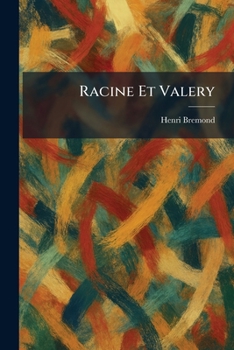
Racine Et Valery

"Racine Et Valery" is an insightful work of literary criticism that examines the artistic and philosophical links between two pillars of French literature: the 17th-century dramatist Jean Racine and the 20th-century poet Paul Val ry. Written by Henri Bremond, a key figure in the "pure poetry" movement, this study explores how both authors utilize language to transcend mere communication, aiming instead for a state of aesthetic and spiritual resonance.
Bremond meticulously analyzes the structural similarities and the shared pursuit of poetic perfection that define their respective bodies of work. Through this comparative lens, "Racine Et Valery" highlights the continuity of the French poetic tradition across three centuries. The text delves into themes of intellectual rigor, the music of verse, and the mystical quality of the written word. It offers a compelling look at how the classical foundations of Racine's tragedies prefigure the modernist sensibilities of Val ry's symbolism. This work remains an invaluable resource for those interested in French literary history, the evolution of poetic theory, and the enduring quest for po sie pure.
This work has been selected by scholars as being culturally important, and is part of the knowledge base of civilization as we know it. This work was reproduced from the original artifact, and remains as true to the original work as possible. Therefore, you may see the original copyright references, library stamps (as most of these works have been housed in our most important libraries around the world), and other notations in the work.
This work is in the public domain in the United States of America, and possibly other nations. Within the United States, you may freely copy and distribute this work, as no entity (individual or corporate) has a copyright on the body of the work.
As a reproduction of a historical artifact, this work may contain missing or blurred pages, poor pictures, errant marks, etc. Scholars believe, and we concur, that this work is important enough to be preserved, reproduced, and made generally available to the public. We appreciate your support of the preservation process, and thank you for being an important part of keeping this knowledge alive and relevant.
Customer Reviews
ThriftBooks ® and the ThriftBooks ® logo are registered trademarks of Thrift Books Global, LLC
