


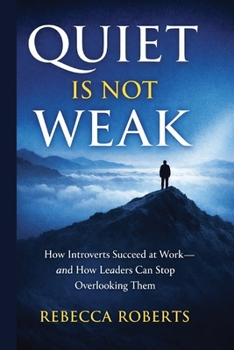
Quiet is Not Weak: How Introverts Succeed at Work - An How Leaders Can Stop Overlooking Them

Introverts are not failing in corporate environments. Corporate environments are failing to recognize how introverted leadership actually works.
In workplaces that reward visibility, speed, and confidence, introverted professionals are often overlooked, underestimated, or quietly filtered out of leadership pipelines-not because they lack skill or ambition, but because their strengths are misunderstood. Silence is mistaken for disengagement. Thoughtfulness is mistaken for hesitation. Restraint is mistaken for weakness.
Quiet Is Not Weak challenges these assumptions head-on.
Written by a former C-suite executive who navigated her own introversion to senior leadership, this book examines how introverts experience the modern workplace-and how leaders unknowingly design systems that exclude some of their most capable people. Through real-world examples and clear-eyed analysis, it explores why introverts are misidentified, how feedback and meeting culture reinforce bias, and why organizations lose thoughtful leaders without ever realizing it.
This is not a book about personality theory or turning introverts into extroverts. It is a practical, honest examination of leadership, influence, and organizational design. It speaks directly to introverted professionals who want to ensure their voice is heard without sacrificing authenticity, and to leaders who want stronger teams, better decisions, and more resilient leadership pipelines.
Inside, you'll learn:
Why introversion is often confused with lack of confidence or leadership potential
How introverted employees can navigate meetings, feedback, and visibility strategically
Why traditional leadership models disadvantage quiet thinkers
How organizations lose introverted talent through disengagement and quiet exits
What leaders must change to identify, develop, and retain introverted leaders
Quiet Is Not Weak is for:
Introverts navigating corporate or public-sector leadership
Managers, executives, and board members responsible for talent development
HR professionals focused on leadership readiness and retention
Anyone who believes leadership effectiveness is about judgment, not noise
In an era defined by complexity, risk, and rapid change, organizations need leaders who can listen, think deeply, and act with restraint. Quiet leadership is not a liability-it is a competitive advantage hiding in plain sight.
Customer Reviews
ThriftBooks® and the ThriftBooks® logo are registered trademarks of Thrift Books Global, LLC
