


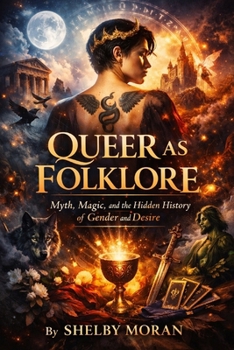
Queer As Folklore: Myth, Magic, and the Hidden History of Gender and Desire

Before there was a closet, there were myths. Before there was shame, there were gods who changed their sex, warriors who loved unto death, and witches who lived by their own rules.
For thousands of years, folklore has preserved what history tried to erase. The shapeshifter who slips between forms, the divine androgyne who embodies both male and female, the sacred companion whose love surpasses that of women, the witch who refuses patriarchal control, the monster whose desire operates outside sanctioned boundaries-these are not accidents of imagination but deliberate encodings of human experiences that every rigid system has tried to deny.
Queer as Folklore reveals the hidden history coded in myth and legend. From ancient Mesopotamian priests who embodied multiple genders to Indigenous nations who recognized third and fourth gender categories as sacred. From Achilles weeping over Patroclus to medieval saints who lived for decades in genders different from their birth assignment. From fairy lovers who transcend mortal categories to vampires reclaimed as icons of queer community.
The evidence has always been there. Inanna declaring "I change the right side into the left side." Gilgamesh's world-ending grief for Enkidu. The selkie trapped in human form, desperate to reclaim her true shape. The Navajo n dleeh who existed from the beginning of creation. These are not modern inventions projected onto ancient texts but preserved truths waiting to be recognized.
Colonialism worked systematically to destroy Indigenous traditions that recognized gender and sexual diversity. Missionaries declared third gender roles demonic. Laws criminalized what had been sacred. Residential schools beat traditional knowledge out of stolen children. But the erasure was never complete. Knowledge survived in fragments, in stories told carefully within communities, in the determination of Indigenous people to reclaim what was stolen.
When direct representation meant death or imprisonment, writers turned to monsters and fairy tales to explore forbidden themes. Gothic literature's supernatural seductions, shapeshifter myths about bodies that transform, companion bonds in heroic literature that transcended what society called friendship-all these preserved queer experience in coded form that hostile observers could not quite condemn.
Now those codes are being cracked open. The monsters have been reclaimed. The witch is no longer what we fear but who we are. Contemporary culture is deliberately transforming symbols of condemnation into sources of pride.
Queer as Folklore provides ancestors for people told they have no history. It proves that the categories used to marginalize are not eternal but constructed. It offers models from the past for imagining different futures. It teaches literacy in the symbolic language through which so much of queer history was necessarily preserved.
The stories never stopped being true. We just forgot how to read them.
Customer Reviews
ThriftBooks ® and the ThriftBooks ® logo are registered trademarks of Thrift Books Global, LLC
