


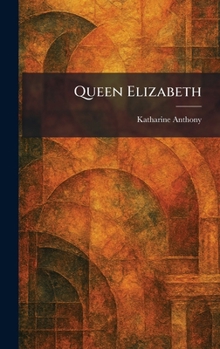
Queen Elizabeth

Select Format
Select Condition 
Book Overview
"Queen Elizabeth" is an insightful and literary exploration of the life of Elizabeth I, the monarch who defined an era of English expansion and cultural flourishing. Written by acclaimed biographer Katharine Anthony, this work moves beyond mere historical facts to provide a psychological portrait of a woman navigating the treacherous waters of 16th-century politics. From her troubled early years and the execution of her mother, Anne Boleyn, to her eventual rise to the throne, the narrative captures the resilience and brilliance of the Tudor queen.
The biography examines Elizabeth's most significant challenges, including the threat of the Spanish Armada, religious tensions within her realm, and her complex relationships with figures like Mary, Queen of Scots. Anthony highlights Elizabeth's mastery of diplomacy and her deliberate choice to remain unmarried, a decision that became central to her political identity. This account offers a vivid look at the Elizabethan court and the enduring legacy of a sovereign who transformed England into a global power. Readers will find a compelling narrative that emphasizes the personal strength and political acumen required to rule a kingdom in a time of great upheaval.
This work has been selected by scholars as being culturally important, and is part of the knowledge base of civilization as we know it. This work was reproduced from the original artifact, and remains as true to the original work as possible. Therefore, you may see the original copyright references, library stamps (as most of these works have been housed in our most important libraries around the world), and other notations in the work.
This work is in the public domain in the United States of America, and possibly other nations. Within the United States, you may freely copy and distribute this work, as no entity (individual or corporate) has a copyright on the body of the work.
As a reproduction of a historical artifact, this work may contain missing or blurred pages, poor pictures, errant marks, etc. Scholars believe, and we concur, that this work is important enough to be preserved, reproduced, and made generally available to the public. We appreciate your support of the preservation process, and thank you for being an important part of keeping this knowledge alive and relevant.
Customer Reviews
ThriftBooks ® and the ThriftBooks ® logo are registered trademarks of Thrift Books Global, LLC
