


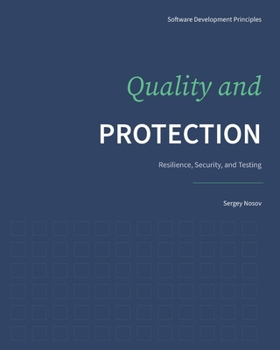
Quality and Protection: Resilience, Security, and Testing

Your system handled normal traffic for months. Then a dependency timed out, retries piled up, threads exhausted, and a partial outage became a total one. The failure mode was predictable-if you had designed for it.
Systems that survive production are designed to fail gracefully. The rest discover their weaknesses during incidents.
75 principles. Zero hand-waving. Each follows the same rigorous format: a clear explanation, warning signs that reveal violations, and markers that confirm correct application. No "it depends" without explaining why.
Three chapters cover:
Resilience and fault tolerance-circuit breakers, bulkheads, backpressure, and chaos engineering that keep partial failures from cascadingSecurity-zero trust, least privilege, defense in depth, and the access control models that limit blast radius when breaches occurTesting-TDD, property-based testing, contract testing, and the test pyramid that catches bugs before production doesFor engineers building systems that must work correctly under adversarial conditions-whether the adversary is a failing dependency, a malicious actor, or an overlooked edge case.
Quality and Protection is Book 4 of the Software Development Principles series. Language-agnostic. Framework-independent. Built to last.
Quality is not an afterthought. Protection is not optional. This book shows you how to build both in from the start.
Customer Reviews
ThriftBooks® and the ThriftBooks® logo are registered trademarks of Thrift Books Global, LLC
