


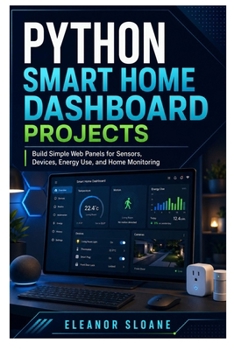
Python Smart Home Dashboard Projects: Build Simple Web Panels for Sensors, Devices, Energy Use, and Home Monitoring

Build professional smart home dashboards that transform raw sensor readings into clear, interactive, and actionable insights using Python.
Whether you're a Python developer, home automation enthusiast, IoT maker, student, or software engineer, this practical guide teaches you how to design modern dashboards that collect, organize, visualize, and manage information from connected devices. Instead of creating isolated scripts, you'll build a complete dashboard application with reusable components, scalable architecture, interactive charts, historical reporting, and real-time monitoring. The book covers Streamlit as the dashboard framework, pandas for time-series analysis, Plotly for interactive visualization, SQLite for local storage, MQTT and Home Assistant integration, simulated sensors for development, and secure deployment practices.
Starting from a clean development environment, you'll learn how to model sensor information, simulate realistic household readings, create responsive user interfaces, process historical information, detect stale or missing values, and develop a maintainable application that grows as your smart home expands. The projects emphasize practical engineering, reusable code, and dependable software design rather than isolated code snippets.
Inside this comprehensive guide, you'll learn how to:
Build modern browser-based dashboards with StreamlitOrganize scalable multipage applications with reusable componentsProcess time-series information using pandasCreate interactive charts and gauges with PlotlyStore historical records efficiently using SQLiteIntegrate MQTT brokers and Home AssistantSimulate realistic sensors before connecting physical hardwareDesign robust architectures that separate monitoring, storage, and controlDetect stale readings, missing values, and abnormal conditionsCreate alerts, historical reports, and interactive analyticsProtect credentials, improve privacy, and implement secure deployment practicesDeploy complete dashboard applications for continuous operationUnlike books that focus on individual libraries, this guide teaches how every component works together to build a complete monitoring platform. Every chapter builds upon previous projects, helping you progress from simple sensor displays to professional-quality dashboard applications that are modular, reliable, and easy to extend.
By the end of this book, you'll have the skills to build responsive web dashboards, integrate multiple smart home platforms, visualize live and historical information, automate monitoring tasks, and develop production-ready applications for real-world home automation projects.
If you're ready to combine Python, modern web technologies, and connected devices into practical dashboard solutions, this book provides the knowledge and hands-on projects to help you build them with confidence.
Customer Reviews
ThriftBooks ® and the ThriftBooks ® logo are registered trademarks of Thrift Books Global, LLC
