


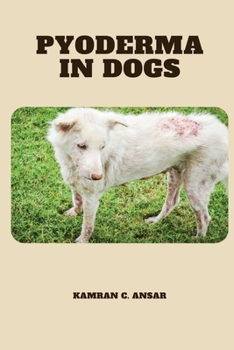
Pyoderma in Dogs

Importance of dogs as pets has increased and they are considered extension of
the family. Large and giant breeds are also kept as watch dogs in the households as well
as in farm houses. Bangalore being an important IT capital, it has been found that there
has been a sharp rise in the dog population and concern from the owner for their good
health.
Pyoderma or cutaneous bacterial infection is one of the common syndromes
encountered in canine practice (Mason; 1997, Pradis; 1998). Virtually any primary
canine skin disorder and several systemic diseases can lead to pyoderma. (Mason
1997). It is one of the most frequently seen conditions in small animal practice and yet
also one of the most frustrating to treat (Craig, 2003).
Primary diseases leading to pyoderma include hypersensitivity, ectoparasitism
and metabolic endocrine diseases (Mason, 1997). However there are cases in which a
deligent search does not reveal a cause for pyoderma and the disease recurs, which is
referred to as idiopathic pyoderma and such pyoderma may require life long
antimicrobial therapy (Mason, 1997). It is also suggested that the epidermal barrier is
less developed in dogs than in other mammals. Therefore, canine skin may be inherently
susceptible to pyoderma than that of other species (Mason, 1991). Despite their
frequency of occurrence many pyodermas are misdiagnosed or improperly managed
(Ihrke, 1987).
It is well documented in dogs that pyoderma is almost always attributable to the
coagulase positive organisms Staphylococus intermedius (Kunkle 1987, Ihrke 1987,
Mason 1991).Microbiologic testing techniques now allow laboratory personnel to
differentiate S. intermedius from S.aureus, the major stophylococcal pathogen in
humans (Kunkle 1987, Hill and Moriello 1994, Hesselbarth et.al 1994). Gram-negative
bacteria such as Proteus sp., Pseudomonas sp., and Escherichia coli may be found as
secondary invaders of pyoderma (Kwochka 1993). Reports have suggested that
coagulase positive staphylococci are normally carried on the hair coat, providing a
source of infectious organisms for skin under appropriate conditions (Kwochka 1993).
Customer Reviews
ThriftBooks ® and the ThriftBooks ® logo are registered trademarks of Thrift Books Global, LLC
