


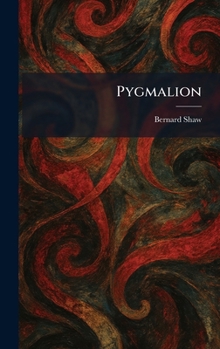
Pygmalion

"Pygmalion" is one of Bernard Shaw's most celebrated plays, offering a biting and witty exploration of the British class system and the transformative power of language. Set in Edwardian London, the story follows the arrogant phonetics professor Henry Higgins as he enters into a wager to transform the speech and manners of Eliza Doolittle, a Cockney flower girl, so that she might pass for a duchess at an ambassador's garden party.
Through its sharp dialogue and satirical lens, the play examines the rigid social barriers of the era and the underlying humanity of its characters. While Higgins views Eliza merely as a linguistic experiment, Eliza herself undergoes a profound personal transformation that challenges the status quo and the expectations placed upon her. Shaw masterfully critiques the superficiality of class distinctions, suggesting that identity is shaped as much by how one is treated as by how one speaks.
A masterpiece of modern drama, "Pygmalion" remains a poignant and humorous study of gender roles, independence, and the complexities of human relationships. Its enduring popularity is a testament to Shaw's ability to blend pointed social commentary with compelling character development, making it an essential work for readers and theater enthusiasts alike.
This work has been selected by scholars as being culturally important, and is part of the knowledge base of civilization as we know it. This work was reproduced from the original artifact, and remains as true to the original work as possible. Therefore, you may see the original copyright references, library stamps (as most of these works have been housed in our most important libraries around the world), and other notations in the work.
This work is in the public domain in the United States of America, and possibly other nations. Within the United States, you may freely copy and distribute this work, as no entity (individual or corporate) has a copyright on the body of the work.
As a reproduction of a historical artifact, this work may contain missing or blurred pages, poor pictures, errant marks, etc. Scholars believe, and we concur, that this work is important enough to be preserved, reproduced, and made generally available to the public. We appreciate your support of the preservation process, and thank you for being an important part of keeping this knowledge alive and relevant.
Customer Reviews
ThriftBooks® and the ThriftBooks® logo are registered trademarks of Thrift Books Global, LLC
