


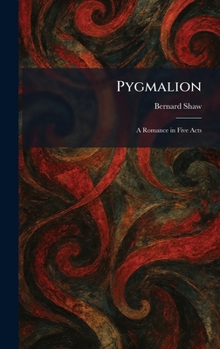
Pygmalion: A Romance in Five Acts

"Pygmalion: A Romance in Five Acts" is one of Bernard Shaw's most celebrated plays, offering a sharp and witty exploration of the British class system, identity, and the power of language. The story follows Henry Higgins, a professor of phonetics, who makes a wager that he can train a Cockney flower girl, Eliza Doolittle, to pass as a duchess at an ambassador's garden party. What begins as a linguistic experiment soon evolves into a complex social and emotional journey, as Eliza transcends her social origins while challenging the rigid boundaries of Edwardian society.
Shaw's masterpiece brilliantly skewers the pretensions of the upper class and investigates the true nature of human dignity. Through sharp dialogue and unforgettable characters, "Pygmalion" remains a timeless commentary on the social constructs that define us and the personal agency required to overcome them. This play served as the inspiration for the world-renowned musical "My Fair Lady" and continues to be a cornerstone of modern drama, celebrated for its intellectual depth and enduring humor.
This work has been selected by scholars as being culturally important, and is part of the knowledge base of civilization as we know it. This work was reproduced from the original artifact, and remains as true to the original work as possible. Therefore, you may see the original copyright references, library stamps (as most of these works have been housed in our most important libraries around the world), and other notations in the work.
This work is in the public domain in the United States of America, and possibly other nations. Within the United States, you may freely copy and distribute this work, as no entity (individual or corporate) has a copyright on the body of the work.
As a reproduction of a historical artifact, this work may contain missing or blurred pages, poor pictures, errant marks, etc. Scholars believe, and we concur, that this work is important enough to be preserved, reproduced, and made generally available to the public. We appreciate your support of the preservation process, and thank you for being an important part of keeping this knowledge alive and relevant.
Customer Reviews
ThriftBooks® and the ThriftBooks® logo are registered trademarks of Thrift Books Global, LLC
