


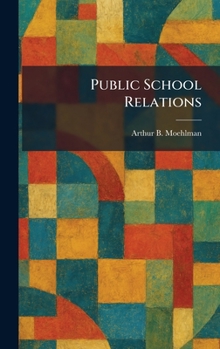
Public School Relations

"Public School Relations" is a foundational exploration of the communication strategies and administrative philosophies necessary to foster a strong relationship between educational institutions and the communities they serve. Written by Arthur B. Moehlman, a significant figure in the field of educational administration, the work addresses the vital need for transparency and public understanding in the management of tax-supported schools.
The book details the structural and ethical frameworks required to maintain effective public relations, emphasizing that education is a cooperative venture between the state, the school board, and the citizenry. Moehlman examines the role of school executives, teachers, and school boards in disseminating information and building trust with parents and taxpayers. By categorizing the various types of school-community contacts and outlining systematic approaches to institutional publicity, the text provides a comprehensive guide for educational leaders seeking to justify school policies and expenditures.
A significant historical document in the development of school management, "Public School Relations" offers timeless insights into the challenges of educational governance and the enduring importance of community engagement in the success of public schooling.
This work has been selected by scholars as being culturally important, and is part of the knowledge base of civilization as we know it. This work was reproduced from the original artifact, and remains as true to the original work as possible. Therefore, you may see the original copyright references, library stamps (as most of these works have been housed in our most important libraries around the world), and other notations in the work.
This work is in the public domain in the United States of America, and possibly other nations. Within the United States, you may freely copy and distribute this work, as no entity (individual or corporate) has a copyright on the body of the work.
As a reproduction of a historical artifact, this work may contain missing or blurred pages, poor pictures, errant marks, etc. Scholars believe, and we concur, that this work is important enough to be preserved, reproduced, and made generally available to the public. We appreciate your support of the preservation process, and thank you for being an important part of keeping this knowledge alive and relevant.
Customer Reviews
ThriftBooks ® and the ThriftBooks ® logo are registered trademarks of Thrift Books Global, LLC
