


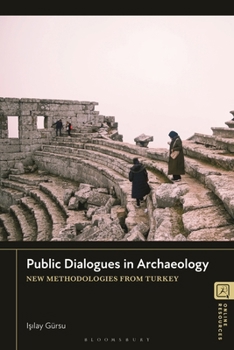
Public Dialogues in Archaeology: New Methodologies from Turkey
No Customer Reviews

Offering a study of archaeological heritage in Turkey, this book shows the alternative ways that the public relates to the past and its remains. Within the theoretical framework of public archaeology, Isilay G rsu brings together the results of decade-long projects - based on quantitative and qualitative research - to show how communities interact with the archaeological past. Generally speaking, the public is viewed as an obstacle to be overcome by the experts and authorities, but G rsu shows how local communities can be potential allies in the safeguarding of heritage assets.
Furthermore, Public Dialogues in Archaeology challenges the notion that intellectual knowledge is a prerequisite for the appreciation of archaeological history, and presents an understanding of the past that works at a somatic, sensory and emotional level. The result is a study that gives voice to different social groups that have often been silent, silenced or misunderstood in official reports and authorised publications. In this novel approach, G rsu concentrates on the 'public' within public archaeology.Format:Hardcover
Language:English
ISBN:1350547301
ISBN13:9781350547308
Release Date:June 2026
Publisher:Bloomsbury Academic
Length:264 Pages
Weight:1.19 lbs.
Dimensions:0.6" x 6.1" x 9.2"
Customer Reviews
0 rating
Copyright © 2026 Thriftbooks.com
Terms of Use | Privacy Policy | Do Not Sell/Share My Personal Information | Cookie Policy | Cookie Preferences | Accessibility Statement
ThriftBooks ® and the ThriftBooks ® logo are registered trademarks of Thrift Books Global, LLC
ThriftBooks ® and the ThriftBooks ® logo are registered trademarks of Thrift Books Global, LLC
