


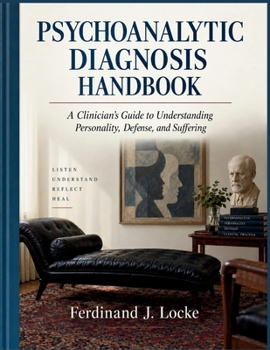
Psychoanalytic Diagnosis Handbook

Why do two patients with similar symptoms respond so differently to treatment? Why do some individuals repeat painful relationship patterns, resist therapeutic progress, or struggle with emotions they cannot explain?
The answer often lies beneath the surface-in personality organization, unconscious defenses, developmental experiences, and the complex dynamics of human relationships.
Psychoanalytic Diagnosis Handbook offers a comprehensive, clinically oriented introduction to understanding personality, psychological suffering, and the deeper processes that shape mental health.
Designed for psychology students, psychotherapists, counselors, and mental health professionals, this practical handbook helps you develop a more thoughtful, individualized approach to psychological assessment and psychodynamic case formulation.
Inside This Handbook, You'll Discover How To:
Understand personality organization: Explore neurotic, borderline, and psychotic levels of functioning and their clinical implications.
Recognize defense mechanisms: Identify splitting, projection, repression, intellectualization, and other psychological defenses.
Explore personality patterns: Examine narcissistic, obsessive, depressive, paranoid, schizoid, borderline, and other personality presentations.
Interpret therapeutic relationships: Understand transference, countertransference, and recurring interpersonal dynamics.
Connect development to psychological functioning: Explore attachment, childhood experiences, trauma, and the formation of personality.
Develop psychodynamic case formulations: Integrate clinical interviews, personality structure, symptom patterns, and developmental history.
Apply diagnostic thinking responsibly: Consider cultural influences, ethical concerns, differential diagnosis, and treatment planning.
A Structured Foundation for Clinical Understanding
Organized into 28 detailed chapters across six major sections, this handbook combines established psychoanalytic concepts with illustrative clinical scenarios, conceptual diagrams, and chapter summaries.
Whether you're beginning your clinical training or strengthening your understanding of psychodynamic assessment, this resource offers a structured way to connect theory with clinical reasoning.
Order your copy today and build a deeper understanding of personality, defense, and psychological suffering.Customer Reviews
ThriftBooks ® and the ThriftBooks ® logo are registered trademarks of Thrift Books Global, LLC
