


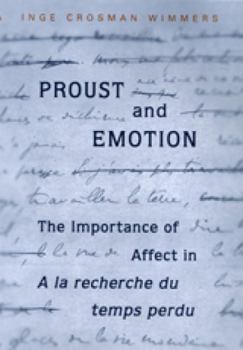
Proust and Emotion: The Importance of Affect in a la Recherche Du Temps Perdu

In Proust and Emotion, Inge Crosman Wimmers proposes a new approach to A la recherche du temps perdu that centres on the role of affect. Through close reading of the hero-narrator's personal history, the author shows how emotional paradigms (especially separation anxiety), involuntary memory, and other compelling impressions give focus and structure to Proust's novel. Drawing on reader-oriented and emotion theories, she shows how affect commands the attention of the 'motivated reader' and is crucial to the process of self-understanding for both the narrator and the reader.
This is the first extensive study in English to take fully into consideration the drafts ( esquisses) published in the new Pl iade edition of the novel, the Mauriac edition of Albertine disparue, and material from the unpublished Proust manuscripts - all of which shed further light on the importance of affect in A la recherche. Proust and Emotion will appeal to readers interested in an approach to Proust that combines insights from philosophy, psychology, and literary aesthetics and in a poetics of reading that pays particular attention to emotion.
Customer Reviews
ThriftBooks® and the ThriftBooks® logo are registered trademarks of Thrift Books Global, LLC
