


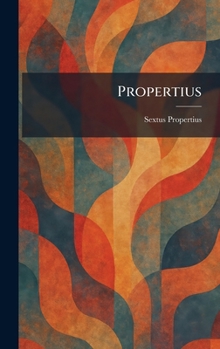
Propertius

"Propertius" showcases the evocative and intricate elegiac poetry of Sextus Propertius, a leading voice of Rome's Augustan era. The work is celebrated for its emotional intensity and technical mastery, particularly within the genre of the love elegy. Central to the collection is the poet's obsession with the woman he calls Cynthia, a figure who inspires verses ranging from ecstatic devotion to bitter despair.
Through these poems, Propertius navigates the complexities of romantic passion while weaving in mythological allusions and reflections on Roman society. Propertius stands apart for his erudite style and bold experimentation with form, which influenced generations of subsequent writers. This collection provides a profound window into the personal and political atmosphere of ancient Rome, making it an indispensable resource for students of classical studies and lovers of lyric poetry. The work captures the tension between private emotion and public duty, solidifying the reputation of the author as one of the great masters of the Latin language. Readers will find a rich tapestry of verses that range from intimate appeals to grand mythological narratives, all composed with a technical brilliance that has captivated scholars and poets for centuries.
This work has been selected by scholars as being culturally important, and is part of the knowledge base of civilization as we know it. This work was reproduced from the original artifact, and remains as true to the original work as possible. Therefore, you may see the original copyright references, library stamps (as most of these works have been housed in our most important libraries around the world), and other notations in the work.
This work is in the public domain in the United States of America, and possibly other nations. Within the United States, you may freely copy and distribute this work, as no entity (individual or corporate) has a copyright on the body of the work.
As a reproduction of a historical artifact, this work may contain missing or blurred pages, poor pictures, errant marks, etc. Scholars believe, and we concur, that this work is important enough to be preserved, reproduced, and made generally available to the public. We appreciate your support of the preservation process, and thank you for being an important part of keeping this knowledge alive and relevant.
Related Subjects
History Literary Literary Criticism & Collections Literature Literature & Fiction PoetryCustomer Reviews
ThriftBooks® and the ThriftBooks® logo are registered trademarks of Thrift Books Global, LLC
