


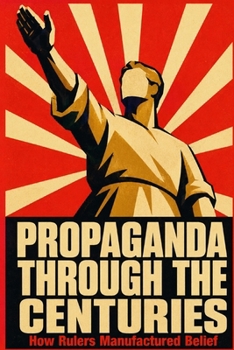
Propaganda Through the Centuries: How Rulers Manufactured Belief

Long before newspapers, radio, television, or social media existed, rulers understood the power of controlling information. Kings commissioned monuments, emperors staged public ceremonies, governments circulated official stories, and political leaders used art and symbolism to shape how their subjects understood power and authority.
Propaganda Through the Centuries: How Rulers Manufactured Belief explores the long history of political persuasion, examining how rulers and governments have used images, architecture, literature, religion, ceremonies, censorship, and public messaging to influence what people believed.
From the monumental inscriptions of ancient empires and the political imagery of Rome to medieval royal propaganda, Renaissance court art, revolutionary pamphlets, imperial newspapers, wartime posters, and modern mass communication, this book traces the evolution of political persuasion across centuries.
Readers will discover how rulers presented themselves as legitimate, powerful, heroic, divinely chosen, or necessary for social order. The book also examines how propaganda adapted to technological change, allowing governments to reach increasingly large audiences and respond to political opposition.
Rather than treating propaganda as something unique to the modern world, this historical account reveals how the struggle to control narratives has existed for thousands of years.
Through examples from different civilizations and political systems, Propaganda Through the Centuries explores the techniques used to manufacture loyalty, shape public memory, demonize enemies, justify wars, and reinforce political authority.
For readers fascinated by political history, psychology, media, power, and the hidden mechanisms behind public belief, this book offers a revealing journey through humanity's long history of persuasion.
Customer Reviews
ThriftBooks ® and the ThriftBooks ® logo are registered trademarks of Thrift Books Global, LLC
