


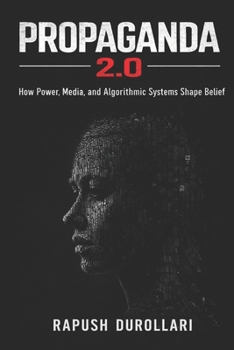
Propaganda 2.0: How Power, Media, and Algorithmic Systems Shape Belief

How Power, Media, and Algorithmic Systems Shape Belief
Picture a busy subway platform. A short video clip goes viral. One commuter laughs while scrolling her phone. Nearby, others glance over. Within minutes, screens glow across the platform as people absorb the same moment, the same idea-without debate, explanation, or intent.
This is how belief spreads now.
In today's world, algorithms, attention markets, and identity-based systems shape what people believe far more than logic or persuasion. Beliefs form through repetition, timing, emotional resonance, and environmental pressure-often without conscious choice. Mental shortcuts like the availability heuristic (what we see often feels important) and the fluency effect (what feels familiar feels true) quietly do the work arguments once did.
Propaganda 2.0 is not a book about messaging tricks, political ads, or persuasion tactics. It is a systems-level examination of how belief forms, stabilizes, and resists correction in environments shaped by media platforms, economic incentives, and algorithmic selection.
The book shows how profit-driven engagement systems reward speed, emotion, and familiarity over accuracy-and how those incentives quietly shape what societies come to accept as "true."
This book explains why:
Facts often arrive too late to matter
Corrections can strengthen false beliefs rather than weaken them
Education struggles to compete with continuous exposure
Identity and status make belief revision costly
Persuasion fails even when arguments are accurate and well-intended
Propaganda 2.0 argues that the problem is not irrational people-it is rational systems producing predictable outcomes. Attention, repetition, emotional signaling, and structural limits now do what persuasion once claimed to do. Where belief once formed through discussion and deliberation, it now emerges through filtered exposure and automated amplification.
Across everyday contexts-adulthood, workplaces, gendered roles, childhood environments, and digital platforms-the book explains why the same system feels different to different people. A fast, swipe-based TikTok feed creates a radically different belief environment than a structured workplace inbox. Disagreement, the book shows, often reflects exposure differences rather than ignorance or bad faith.
In its final sections, Propaganda 2.0 moves beyond persuasion and correction toward orientation: a realistic way of understanding what can and cannot be changed in complex belief systems. Instead of offering false hope or control, it offers clarity-about limits, leverage, and where effort still matters.
This book is for readers who:Sense that arguments no longer work the way they used to
Feel exhausted by endless correction cycles and online conflict
Want to understand belief without moralizing or blaming
Are ready to trade illusion for accuracy
Propaganda 2.0 does not promise to change minds.
It explains why that expectation itself has become outdated-and what becomes possible once you see the system clearly.
Customer Reviews
ThriftBooks® and the ThriftBooks® logo are registered trademarks of Thrift Books Global, LLC
