


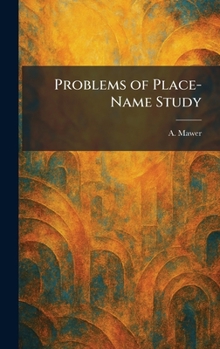
Problems of Place-Name Study

"Problems of Place-Name Study" is a seminal investigation into the scientific and historical methods used to interpret the origins and meanings of geographic names. Authored by A. Mawer, a preeminent figure in the study of English nomenclature, this work serves as an essential guide for understanding toponymy as a multidisciplinary endeavor. The text explores the critical intersection of linguistics, philology, and history, demonstrating how the study of names provides invaluable evidence for settlement patterns, social structures, and the movement of peoples across the centuries.
The book addresses the inherent difficulties of the field, from identifying corrupted spellings in medieval manuscripts to understanding the complex phonological changes that occur over generations. Mawer advocates for a rigorous, systematic approach, cautioning against amateur folk etymology and emphasizing the need for comprehensive documentation and comparative analysis. By treating place-names as living artifacts of the past, "Problems of Place-Name Study" reveals the hidden layers of cultural history preserved in the landscape. It remains a vital resource for scholars of English history, historical geography, and etymology, offering profound insights into the linguistic heritage that defines our environment.
This work has been selected by scholars as being culturally important, and is part of the knowledge base of civilization as we know it. This work was reproduced from the original artifact, and remains as true to the original work as possible. Therefore, you may see the original copyright references, library stamps (as most of these works have been housed in our most important libraries around the world), and other notations in the work.
This work is in the public domain in the United States of America, and possibly other nations. Within the United States, you may freely copy and distribute this work, as no entity (individual or corporate) has a copyright on the body of the work.
As a reproduction of a historical artifact, this work may contain missing or blurred pages, poor pictures, errant marks, etc. Scholars believe, and we concur, that this work is important enough to be preserved, reproduced, and made generally available to the public. We appreciate your support of the preservation process, and thank you for being an important part of keeping this knowledge alive and relevant.
Customer Reviews
ThriftBooks ® and the ThriftBooks ® logo are registered trademarks of Thrift Books Global, LLC
