


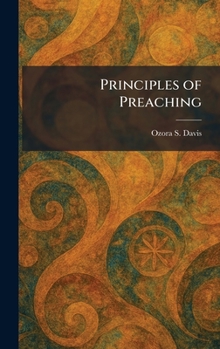
Principles of Preaching

"Principles of Preaching" is a comprehensive and practical guide dedicated to the art of homiletics and the spiritual discipline of sermon preparation. Written by Ozora S. Davis, a distinguished figure in theological education, this work serves as an essential resource for ministers, seminary students, and anyone called to the pulpit. The book delves into the fundamental methods of constructing impactful sermons, emphasizing the importance of clarity, biblical integrity, and the emotional resonance required to connect with a congregation.
Throughout the text, Davis explores the multifaceted role of the preacher, balancing the intellectual demands of scriptural interpretation with the pastoral necessity of addressing the needs of a diverse audience. By examining the structural elements of a sermon-from the initial spark of an idea to the final delivery-the author provides a timeless framework for effective communication within a religious context. "Principles of Preaching" remains a significant contribution to pastoral theology, offering insights that bridge the gap between ancient truths and contemporary ministry. Its focus on the integrity of the message and the character of the messenger ensures its continued relevance for those seeking to master the craft of public testimony and spiritual leadership.
This work has been selected by scholars as being culturally important, and is part of the knowledge base of civilization as we know it. This work was reproduced from the original artifact, and remains as true to the original work as possible. Therefore, you may see the original copyright references, library stamps (as most of these works have been housed in our most important libraries around the world), and other notations in the work.
This work is in the public domain in the United States of America, and possibly other nations. Within the United States, you may freely copy and distribute this work, as no entity (individual or corporate) has a copyright on the body of the work.
As a reproduction of a historical artifact, this work may contain missing or blurred pages, poor pictures, errant marks, etc. Scholars believe, and we concur, that this work is important enough to be preserved, reproduced, and made generally available to the public. We appreciate your support of the preservation process, and thank you for being an important part of keeping this knowledge alive and relevant.
Customer Reviews
ThriftBooks ® and the ThriftBooks ® logo are registered trademarks of Thrift Books Global, LLC
