


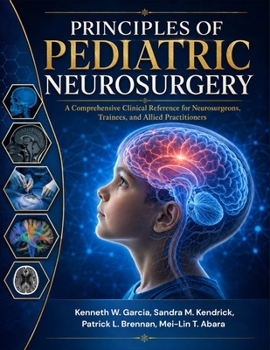
Principles Of Pediatric Neurosurgery: A Comprehensive Clinical Reference for Neurosurgeons, Trainees, and Allied Practitioners
No Customer Reviews

When every millimeter can shape a child's future, you need a reference that connects developmental anatomy, diagnostic reasoning, operative planning, and long-term care.
Principles of Pediatric Neurosurgery gives you a structured, clinically oriented guide to the full breadth of conditions encountered in pediatric neurosurgical practice. Across nineteen chapters, you move from neuroanatomy, embryology, brain maturation, imaging, anesthesia, and perioperative care to advanced management of hydrocephalus, craniosynostosis, spinal dysraphism, tumors, epilepsy, vascular disorders, trauma, infection, and functional procedures.
Designed for surgeons, fellows, residents, medical students, and allied practitioners, this volume combines foundational science with practical decision-making. Clinical vignettes, learning objectives, surgical pearls, safety alerts, and evidence-focused discussions help you connect core concepts with the realities of assessment, operative technique, complication prevention, and multidisciplinary care.
Coverage follows the patient journey from neonatal and congenital conditions through childhood and adolescence, while dedicated sections on outcomes, neuroprotection, quality improvement, survivorship, and future technologies keep your attention on both immediate surgical goals and lifelong consequences.
Inside this reference, you will: Build an age-specific understanding of cranial, cortical, ventricular, spinal, and cerebrovascular anatomy for safer surgical planning.Interpret CT, MRI, functional imaging, diffusion tensor imaging, and other studies in the context of developing neural structures.Apply practical principles to hydrocephalus, neural tube defects, craniosynostosis, brain and spinal tumors, epilepsy, and vascular malformations.Strengthen perioperative decisions involving anesthesia, intracranial pressure, neurophysiological monitoring, postoperative care, and risk stratification.Recognize common complications, technical pitfalls, safety concerns, and long-term developmental consequences before they affect outcomes.Integrate neuro-oncology, rehabilitation, survivorship, patient safety, minimally invasive techniques, robotics, and artificial intelligence into multidisciplinary practice.You can also use the neurological reference values, glossary, and extensive references to support rapid review, terminology checks, and deeper study.
If you are preparing for training, reviewing a complex case, or expanding your specialty knowledge, this reference gives you a coherent framework for thoughtful, evidence-informed care. Add it to your professional library and approach pediatric neurological disease with greater structure, clarity, and confidence.
Principles of Pediatric Neurosurgery gives you a structured, clinically oriented guide to the full breadth of conditions encountered in pediatric neurosurgical practice. Across nineteen chapters, you move from neuroanatomy, embryology, brain maturation, imaging, anesthesia, and perioperative care to advanced management of hydrocephalus, craniosynostosis, spinal dysraphism, tumors, epilepsy, vascular disorders, trauma, infection, and functional procedures.
Designed for surgeons, fellows, residents, medical students, and allied practitioners, this volume combines foundational science with practical decision-making. Clinical vignettes, learning objectives, surgical pearls, safety alerts, and evidence-focused discussions help you connect core concepts with the realities of assessment, operative technique, complication prevention, and multidisciplinary care.
Coverage follows the patient journey from neonatal and congenital conditions through childhood and adolescence, while dedicated sections on outcomes, neuroprotection, quality improvement, survivorship, and future technologies keep your attention on both immediate surgical goals and lifelong consequences.
Inside this reference, you will: Build an age-specific understanding of cranial, cortical, ventricular, spinal, and cerebrovascular anatomy for safer surgical planning.Interpret CT, MRI, functional imaging, diffusion tensor imaging, and other studies in the context of developing neural structures.Apply practical principles to hydrocephalus, neural tube defects, craniosynostosis, brain and spinal tumors, epilepsy, and vascular malformations.Strengthen perioperative decisions involving anesthesia, intracranial pressure, neurophysiological monitoring, postoperative care, and risk stratification.Recognize common complications, technical pitfalls, safety concerns, and long-term developmental consequences before they affect outcomes.Integrate neuro-oncology, rehabilitation, survivorship, patient safety, minimally invasive techniques, robotics, and artificial intelligence into multidisciplinary practice.You can also use the neurological reference values, glossary, and extensive references to support rapid review, terminology checks, and deeper study.
If you are preparing for training, reviewing a complex case, or expanding your specialty knowledge, this reference gives you a coherent framework for thoughtful, evidence-informed care. Add it to your professional library and approach pediatric neurological disease with greater structure, clarity, and confidence.
Format:Paperback
Language:English
ISBN:B0HD7V1F8Q
ISBN13:9798191136486
Release Date:August 2026
Publisher:Independently Published
Length:470 Pages
Weight:2.38 lbs.
Dimensions:0.9" x 8.5" x 11.0"
Customer Reviews
0 rating
Copyright © 2026 Thriftbooks.com
Terms of Use | Privacy Policy | Do Not Sell/Share My Personal Information | Cookie Policy | Cookie Preferences | Accessibility Statement
ThriftBooks ® and the ThriftBooks ® logo are registered trademarks of Thrift Books Global, LLC
ThriftBooks ® and the ThriftBooks ® logo are registered trademarks of Thrift Books Global, LLC
