


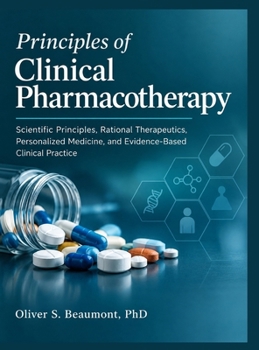
Principles of Clinical Pharmacotherapy

Select Format
Select Condition 
Book Overview
Clinical pharmacotherapy is a cornerstone of modern healthcare, bridging the science of pharmacology with the practical demands of disease management, therapeutic decision-making, and patient-centered care. Principles of Clinical Pharmacotherapy provides a comprehensive, scientifically grounded exploration of the principles that guide the safe, rational, and effective use of medications in clinical practice. Designed as an academic textbook for students, educators, and healthcare professionals, this book examines the scientific foundations of drug therapy and their application to contemporary clinical challenges.
The text explores the relationship between pharmacokinetics, pharmacodynamics, drug efficacy, and therapeutic safety, establishing a foundation for understanding how medications interact with the human body and how these interactions influence clinical outcomes. It examines the principles of rational prescribing, medication selection, dosage individualization, therapeutic monitoring, and the prevention and management of adverse drug reactions. Particular attention is given to drug interactions, contraindications, medication errors, and the clinical considerations that influence the selection and adjustment of treatment regimens.
A central theme of this textbook is the integration of evidence-based medicine into pharmacotherapeutic decision-making. Readers are introduced to the evaluation of clinical research, interpretation of therapeutic evidence, application of clinical practice guidelines, and assessment of treatment effectiveness. The discussion also addresses personalized medicine, pharmacogenomics, and the influence of individual patient characteristics-including age, organ function, comorbidities, and concurrent medications-on therapeutic choices.
The book further examines pharmacotherapy across major disease categories and clinical settings, emphasizing the importance of individualized treatment strategies, ongoing patient assessment, and interdisciplinary collaboration. By connecting fundamental scientific concepts with clinical reasoning, it provides a structured framework for evaluating therapeutic alternatives, balancing potential benefits against risks, and optimizing medication use.
Principles of Clinical Pharmacotherapy serves as a valuable academic resource for pharmacy and medical students, clinical pharmacists, physicians, pharmacology students, and other healthcare professionals seeking a deeper understanding of rational therapeutics and medication management. Its emphasis on scientific principles, evidence-based practice, personalized treatment, and medication safety makes it suitable for classroom instruction, professional reference, and further study in clinical pharmacotherapy.
Ultimately, this textbook presents clinical pharmacotherapy as a systematic and continually evolving discipline-one that requires scientific knowledge, critical evaluation of evidence, and careful consideration of individual patient needs to support effective, safe, and responsible therapeutic care.
Customer Reviews
ThriftBooks ® and the ThriftBooks ® logo are registered trademarks of Thrift Books Global, LLC
