


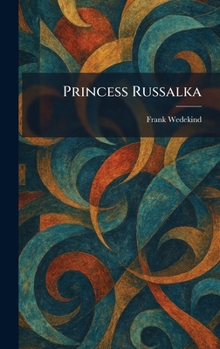
Princess Russalka

"Princess Russalka" is a compelling collection of short stories, poems, and prose sketches by the influential German dramatist and author Frank Wedekind. Best known for his provocative plays that challenged the social norms of the early 20th century, Wedekind brings the same biting satire and psychological depth to this volume. The stories explore themes of human desire, social hypocrisy, and the complexities of the human psyche, often blending elements of the grotesque with sharp wit.
From the titular story to various character sketches and allegorical tales, the work captures the restless spirit of the fin de si cle and the emerging expressionist movement. Wedekind's writing remains notable for its uncompromising look at the tensions between individual freedom and societal constraints. Readers of classic European literature will find "Princess Russalka" to be an evocative example of Wedekind's unique literary voice, offering a glimpse into the dark, often humorous, and always insightful mind of one of Germany's most controversial and celebrated writers.
This work has been selected by scholars as being culturally important, and is part of the knowledge base of civilization as we know it. This work was reproduced from the original artifact, and remains as true to the original work as possible. Therefore, you may see the original copyright references, library stamps (as most of these works have been housed in our most important libraries around the world), and other notations in the work.
This work is in the public domain in the United States of America, and possibly other nations. Within the United States, you may freely copy and distribute this work, as no entity (individual or corporate) has a copyright on the body of the work.
As a reproduction of a historical artifact, this work may contain missing or blurred pages, poor pictures, errant marks, etc. Scholars believe, and we concur, that this work is important enough to be preserved, reproduced, and made generally available to the public. We appreciate your support of the preservation process, and thank you for being an important part of keeping this knowledge alive and relevant.
Customer Reviews
ThriftBooks ® and the ThriftBooks ® logo are registered trademarks of Thrift Books Global, LLC
