


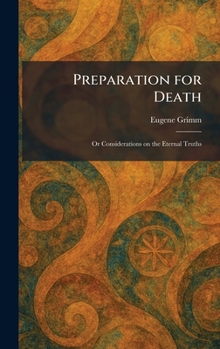
Preparation for Death: Or Considerations on the Eternal Truths

"Preparation for Death; Or Considerations on the Eternal Truths" is a profound spiritual guide rooted in the Catholic tradition, designed to lead the reader through a series of reflections on the transient nature of life and the ultimate reality of eternity. Written with the intent of fostering a deeper relationship with the divine, the work focuses on the themes of penance, prayer, and the four last things: Death, Judgment, Heaven, and Hell.
Through a structured series of meditations, the book encourages faithful adherents to live a life of virtue and constant readiness for the transition from the temporal world to the spiritual realm. Rev. Eugene Grimm presents these considerations with a pastoral tone, aiming to provide comfort to the soul while emphasizing the urgency of spiritual vigilance. Each chapter serves as a contemplative tool, guiding the reader through the complexities of human frailty and the boundless mercy of God. This classic of devotional literature remains a significant resource for those seeking to deepen their faith and find peace in the contemplation of their final destiny. It stands as a timeless exploration of eschatological themes and a practical manual for Christian piety.
This work has been selected by scholars as being culturally important, and is part of the knowledge base of civilization as we know it. This work was reproduced from the original artifact, and remains as true to the original work as possible. Therefore, you may see the original copyright references, library stamps (as most of these works have been housed in our most important libraries around the world), and other notations in the work.
This work is in the public domain in the United States of America, and possibly other nations. Within the United States, you may freely copy and distribute this work, as no entity (individual or corporate) has a copyright on the body of the work.
As a reproduction of a historical artifact, this work may contain missing or blurred pages, poor pictures, errant marks, etc. Scholars believe, and we concur, that this work is important enough to be preserved, reproduced, and made generally available to the public. We appreciate your support of the preservation process, and thank you for being an important part of keeping this knowledge alive and relevant.
Customer Reviews
ThriftBooks ® and the ThriftBooks ® logo are registered trademarks of Thrift Books Global, LLC
