


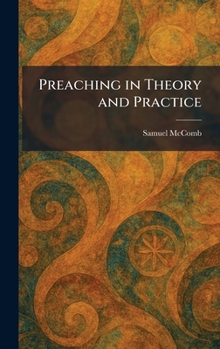
Preaching in Theory and Practice

"Preaching in Theory and Practice" provides an insightful and thorough exploration into the craft of homiletics, bridging the gap between theological foundation and the practical demands of the pulpit. Authored by Samuel McComb, a prominent figure in early 20th-century religious thought, this work examines the essential elements that constitute a successful sermon, from the initial conception of a theme to its final delivery before a congregation.
The text addresses the challenges faced by preachers in a shifting social landscape, offering timeless advice on how to communicate complex spiritual truths with clarity and conviction. McComb emphasizes the importance of the preacher's personality, the necessity of intellectual rigor, and the profound role of empathy in reaching the hearts of listeners. By analyzing the rhetorical techniques and spiritual disciplines required for effective ministry, "Preaching in Theory and Practice" serves as both a practical manual for aspiring clergy and a thoughtful reflection on the enduring power of the spoken word in the Christian tradition.
This volume is a valuable resource for students of theology, practicing ministers, and anyone interested in the history and evolution of religious oratory. It remains a significant contribution to the study of pastoral leadership and the art of communication within a sacred context.
This work has been selected by scholars as being culturally important, and is part of the knowledge base of civilization as we know it. This work was reproduced from the original artifact, and remains as true to the original work as possible. Therefore, you may see the original copyright references, library stamps (as most of these works have been housed in our most important libraries around the world), and other notations in the work.
This work is in the public domain in the United States of America, and possibly other nations. Within the United States, you may freely copy and distribute this work, as no entity (individual or corporate) has a copyright on the body of the work.
As a reproduction of a historical artifact, this work may contain missing or blurred pages, poor pictures, errant marks, etc. Scholars believe, and we concur, that this work is important enough to be preserved, reproduced, and made generally available to the public. We appreciate your support of the preservation process, and thank you for being an important part of keeping this knowledge alive and relevant.
Customer Reviews
ThriftBooks® and the ThriftBooks® logo are registered trademarks of Thrift Books Global, LLC
