


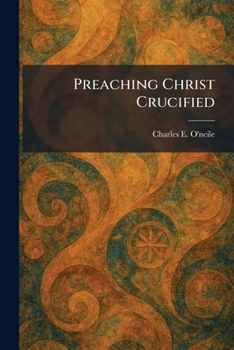
Preaching Christ Crucified

"Preaching Christ Crucified" is a profound exploration of the central tenet of the Christian faith: the sacrifice of Jesus Christ on the Cross. Authored by Charles E. O'neile, this work serves as both a theological treatise and a practical guide for members of the clergy and dedicated lay readers. It delves into the spiritual and homiletic significance of the Crucifixion, emphasizing its role as the indispensable foundation of Christian preaching and witness.
The text offers insightful reflections on the mystery of the Cross, providing readers with a deeper understanding of the Passion and its transformative power in the life of the believer. Through a series of meditations and doctrinal expositions, O'neile encourages a renewed focus on the core message of the Gospel, challenging readers to consider the profound implications of divine sacrifice. "Preaching Christ Crucified" remains a valuable resource for those seeking to enrich their spiritual journey or enhance their ministry by centering their message on the ultimate expression of love and redemption. This work stands as a significant contribution to Christian literature, highlighting the enduring importance of the Passion in religious thought and practice.
This work has been selected by scholars as being culturally important, and is part of the knowledge base of civilization as we know it. This work was reproduced from the original artifact, and remains as true to the original work as possible. Therefore, you may see the original copyright references, library stamps (as most of these works have been housed in our most important libraries around the world), and other notations in the work.
This work is in the public domain in the United States of America, and possibly other nations. Within the United States, you may freely copy and distribute this work, as no entity (individual or corporate) has a copyright on the body of the work.
As a reproduction of a historical artifact, this work may contain missing or blurred pages, poor pictures, errant marks, etc. Scholars believe, and we concur, that this work is important enough to be preserved, reproduced, and made generally available to the public. We appreciate your support of the preservation process, and thank you for being an important part of keeping this knowledge alive and relevant.
Customer Reviews
ThriftBooks ® and the ThriftBooks ® logo are registered trademarks of Thrift Books Global, LLC
