


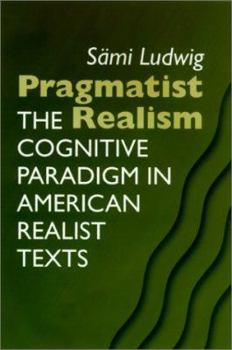
Pragmatist Realism: The Cognitive Paradigm In American Realist Texts
No Customer Reviews

Literary realists have often been dismissed by later writers of the modernist and post-structuralist schools for their lack of aesthetic sophistication and etymological na vete. In Pragmatist Realism, S mi Ludwig argues that the artistic quality of realist texts is better appreciated by approaching them from a cognitive perspective, rather than from a linguistic or formalist one.
Ludwig notes that literary realism arose from the same cultural scene as the pragmatist philosophy of William James and Charles Sanders Peirce, and that cognitive psychology built upon pragmatist philosophy. He argues that the aim of realist writers, like that of cognitive scientists, is to track the arc of learning from experiences. Ludwig contends that this cognitive perspective is a useful corrective to other approaches to literary criticism that focus on textual hermeneutics. He argues further that the cognitive paradigm can enhance our understanding of literary representation, not only in realist works by Mark Twain, William Dean Howells, Henry James, Charles Chesnutt, and others, but in literature generally.
Ludwig notes that literary realism arose from the same cultural scene as the pragmatist philosophy of William James and Charles Sanders Peirce, and that cognitive psychology built upon pragmatist philosophy. He argues that the aim of realist writers, like that of cognitive scientists, is to track the arc of learning from experiences. Ludwig contends that this cognitive perspective is a useful corrective to other approaches to literary criticism that focus on textual hermeneutics. He argues further that the cognitive paradigm can enhance our understanding of literary representation, not only in realist works by Mark Twain, William Dean Howells, Henry James, Charles Chesnutt, and others, but in literature generally.
Format:Paperback
Language:English
ISBN:0299176649
ISBN13:9780299176648
Release Date:July 2002
Publisher:University of Wisconsin Press
Length:320 Pages
Weight:0.15 lbs.
Dimensions:9.0" x 0.7" x 6.0"
Customer Reviews
0 rating
Copyright © 2026 Thriftbooks.com
Terms of Use | Privacy Policy | Do Not Sell/Share My Personal Information | Cookie Policy | Cookie Preferences | Accessibility Statement
ThriftBooks ® and the ThriftBooks ® logo are registered trademarks of Thrift Books Global, LLC
ThriftBooks ® and the ThriftBooks ® logo are registered trademarks of Thrift Books Global, LLC
