


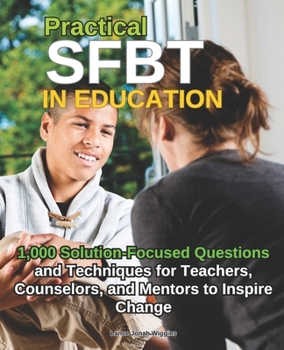
Practical SFBT in Education: 1,000 Solution-Focused Questions and Techniques for Teachers, Counselors, and Mentors to Inspire Change
No Customer Reviews

Practical SFBT in Education
1,000 Solution-Focused Questions and Techniques for Teachers, Counselors, and Mentors to Inspire Change
For years, traditional approaches to helping students, mentees, and clients have focused on problem analysis-digging into the "why" of every struggle, hoping that a solution magically appears. Spoiler: It rarely does. Practical SFBT in Education flips the script. It hands you 1,000 practical, tested questions and techniques designed to move learners forward-without spending years unpacking every minor setback.
What This Book Offers1,000 Solution-Focused Questions - No more awkward silences or dead-end conversations. Whether you need a quick check-in or an in-depth reflection, there's a question here that fits.Real-Life Application - Educators, mentors, and counselors will find ready-to-use techniques that make interactions productive and motivating.Step-by-Step Guidance - Learn how to ask the right questions, when to use them, and why they work.Techniques to Track Progress - Practical tools like scaling charts, exception-finding logs, and goal-setting worksheets make sure small wins don't get ignored.How to Handle Resistance - Let's be real-some students and mentees don't like change. You'll learn how to handle pushback and guide even the most reluctant learners toward progress.Solution-Focused Brief Therapy(SFBT)WorksheetsWho This Book is ForTeachers - Who are sick of repeatedly nagging about missing homework and classroom disruptions.Counselors - Who want effective ways to help students reframe their struggles and build confidence.Mentors - Who need a toolkit of structured, motivating questions to guide mentees toward their next step.What You'll LearnHow to shift focus from problems to progress-so students stop obsessing over what went wrong and start recognizing what went right.Why small successes matter-and how to reinforce them so they grow into long-term improvement.The best way to use open-ended, scaling, and miracle questions-without sounding scripted or awkward.How to measure progress without overcomplicating it-so you know whether the approach is actually working.Format:Paperback
Language:English
ISBN:B0DVRXX22S
ISBN13:9798309131891
Release Date:February 2025
Publisher:Independently Published
Length:202 Pages
Weight:0.78 lbs.
Dimensions:0.4" x 7.5" x 9.3"
Customer Reviews
0 rating
Copyright © 2026 Thriftbooks.com
Terms of Use | Privacy Policy | Do Not Sell/Share My Personal Information | Cookie Policy | Cookie Preferences | Accessibility Statement
ThriftBooks ® and the ThriftBooks ® logo are registered trademarks of Thrift Books Global, LLC
ThriftBooks ® and the ThriftBooks ® logo are registered trademarks of Thrift Books Global, LLC
