


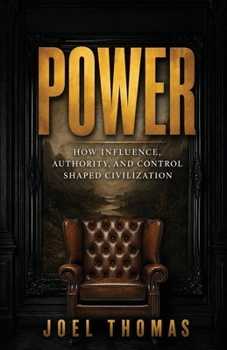
Power: How Influence, Authority, and Control Shaped Civilization

Power is not held. It is structured.
Most people think power lives in leaders: presidents, generals, kings, executives, and revolutionaries.
They are wrong.
Power lives in systems.
In Power: How Influence, Authority, and Control Shaped Civilization, Joel Thomas examines power not as a personality trait, moral virtue, or political slogan, but as a structural force that determines how societies are built, governed, stabilized, challenged, and eventually transformed.
Across history, civilizations rise and fall not simply because of great leaders or decisive battles, but because power organizes itself through recurring mechanisms: authority, coercion, legitimacy, wealth, information, institutions, culture, technology, fear, and consent.
This book reveals hidden architecture behind mechanisms.
Inside, you will examine:
Why authority is cheaper and more durable than forceHow institutions outlive the people who create themWhy legitimacy is one of power's greatest force multipliersHow economic, military, political, cultural, and technological power convert into one anotherWhy systems resist reform even after their failures become obviousHow power hides in rules, routines, incentives, traditions, and accepted assumptionsDrawing from political theory, history, sociology, and institutional analysis. Power follows the structural patterns that have shaped human civilization from pre-state societies and sacred kingship to empires, and modern systems of control.
This is not a leadership book.
It is not a motivational argument.
It is not a simple history of rulers and wars.
It is a diagnostic framework for understanding how power actually works.
Customer Reviews
ThriftBooks ® and the ThriftBooks ® logo are registered trademarks of Thrift Books Global, LLC
