


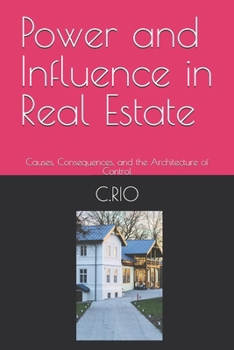
Power and Influence in Real Estate: Causes, Consequences, and the Architecture of Control

This book offers a bold and critical examination of how power operates within the global real estate market. From historical land ownership to modern financial instruments, from urban policy to technological surveillance, it reveals how a small group of actors concentrate control over land, housing, and capital. Through detailed analysis of political, economic, social, and educational systems, the book explores how inequality is not just a byproduct but a design of the real estate structure. It also charts possible futures, offering alternatives rooted in justice, transparency, and community-driven development. A must-read for professionals, scholars, investors, and activists who want to understand-and transform-the architecture of control that shapes our cities and lives.
Customer Reviews
ThriftBooks ® and the ThriftBooks ® logo are registered trademarks of Thrift Books Global, LLC
