


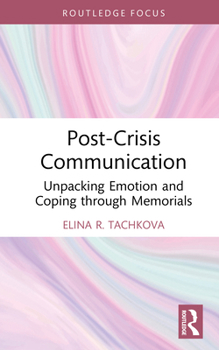
Post-Crisis Communication: Unpacking Emotion and Coping through Memorials
No Customer Reviews

This book unpacks the role of memorials as artefacts of post-crisis communication. The book will be of interest to students and researchers in Crisis Communication, Organizational Communication, Public Relations and Strategic Communication.
Format:Hardcover
Language:English
ISBN:1032906278
ISBN13:9781032906270
Release Date:July 2026
Publisher:Routledge
Length:130 Pages
Weight:0.69 lbs.
Dimensions:0.4" x 5.5" x 8.5"
Customer Reviews
0 rating
Copyright © 2026 Thriftbooks.com
Terms of Use | Privacy Policy | Do Not Sell/Share My Personal Information | Cookie Policy | Cookie Preferences | Accessibility Statement
ThriftBooks ® and the ThriftBooks ® logo are registered trademarks of Thrift Books Global, LLC
ThriftBooks ® and the ThriftBooks ® logo are registered trademarks of Thrift Books Global, LLC
