
Skip to content
Scan a barcode
Scan
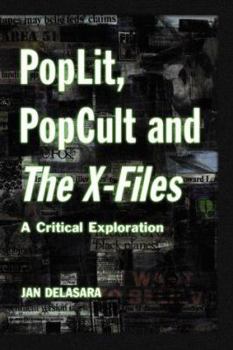
Paperback PopLit, PopCult and The X-Files: A Critical Exploration Book

ISBN: 0786407891

ISBN13: 9780786407897

PopLit, PopCult and The X-Files: A Critical Exploration

Select Format

Select Condition ThriftBooks Help Icon

Recommended

Format: Paperback

Condition: Good

$9.89
Save $20.06!
List Price $29.95
Almost Gone, Only 1 Left!
Save to List

Book Overview

For six acclaimed seasons, FBI paranormal detectives Mulder and Scully have been chasing monsters and little green men and exposing government conspiracies, while espousing the mantras "trust no one" and "the truth is out there." This work takes a close look at the popular television series and shows how its style, character and narrative structure have continued to tease and please a wide viewing audience every week for six years.

The first section examines the text of the series and the progression of its mythic story arc. This part also looks at the show's use of expressionistic techniques in both its visual and sound effects; the related tropes of self-reflexive humor, irony and the grotesque; and its ability to give the audience an occasional strong sensory jolt.

The second section explores the context that has given rise to The X-Files phenomenon in the 1990s. The show's gothic horror tradition is established, and its contribution to the Zeitgeist of the 90s is also acknowledged.

Customer Reviews

5 ratings

Tommy Garrett an editor with Canyon News in Beverly Hills Loved this Book

HOLLYWOOD--PopLit, PopCult and The X-Files is not only a critical exploration of the series but a must-read for any fans of "The X-Files" television series. Author Jan Delasara is a professor of English at Metropolitan State College in Denver, Colo., where she also teaches classes in film history and horror literature. She is a member of the International Association for Fantasy in the Arts and the Popular Culture Association and has written film and book reviews and presented papers on cinema and the theory and history of horror fiction. I would not go as far as calling "The X-Files" part of the horror genre, but its supernatural storylines did many times border on the incredible and the scary. Surely the episodes in the beginning of the series leaned toward the horror genre more than the end of the series did. The mantra "trust no one" was eclipsed by "the truth is out there" by the time writer, producer Chris Carter had made both Scully and Mulder cult heroes on television. The two FBI agents played by David Duchovny and Gillian Anderson would in time outshine the storylines in many episodes. During the third year of the series, I felt it had lost a lot of its spookiness by making the show more about Mulder's childhood and familial history than about the characters who would be featured from time to time. This book's author seems to agree with me, though she spends a lot more time explaining in incredible detail what made the series so popular to its fans and to critics alike. The author's style of writing is very easy to understand, while her knowledge of the series is almost encyclopedic. I thought by my being a fan of the show and watching every episode that I knew it all, if not close to it. Read this book and you find that you know very little and the author knows a heck of a lot more. The first part of this book examines the text of the series and the progression of its mythic story arc. This part also looks at the show's use of expressionistic techniques, which became more visual by the end of the series. Early on it was the writing that made you afraid, by the end of this series, Carter seemed to want to gross fans out or scare them to death by special effects. The second portion of the book explores the context that has given rise to "The X-Files" as a cult classic. The 1990s will forever be remembered by this series, which changed the face of television from the 1980s primetime soap genre to television horror. The series in my opinion burned itself out making us jump instead of making us think, as it had done early in the show's life. This author's book however is a must-have for any fan of the hit series or any fan looking to watch the series for the first time on DVD.

Exploring THE X-FILES!

Do you know that "The X-Files" TV series includes both "free-standing" and "bound" episodes? Do you know that these programs are thematically connected in many subtle ways? Are you aware that this program's view of reality has deep roots, reaching back to German Expressionism in painting and film, such as "The Cabinet of Dr. Caligari" released in 1919? That the character of Fox Mulder evolved from the traditions of such sleuths as Sherlock Holmes and Sam Spade? Does Dana Scully remind you of Clarice Starling from "Silence of the Lambs"? How do the details and atmosphere of "The X-Files" bear a familial resemblance to "Star Trek," "Twin Peaks," and even the Cold War paranoia induced by 1950's McCarthyism? If you are interested in such explorations, Delasara's book is a rare treat. It is clear, intelligent, articulate, well-organized, and thoroughly researched. The author examines "The X-Files" as if it were a piece of superb literature. Delasara lucidly and easily discusses its characters, plots, themes, style, genre, and content. She then connects these elements to the program's genre (e.g., science fiction, gothic horror, film noir detective fiction and film). Next--and especially fascinating--is the author's analysis of how this program links to its larger, social and cultural contexts, what she terms, "the zeitgeist of the 90s," which includes national and world politics, myth, folklore and urban legends, science, UFO and paranormal phenomena, religion, Jungian psychology, economics, folklore, and Cold War paranoia. One section explores how the discourse of UFOs, a dominant if "underground" type of discourse, functions in ways which influence our everyday lives.Throughout this book, Delasara lays bare the creative complexity and nuance of "The X-Files." She mainly accomplishes this through deftly "playing" with oppositions: history vs. current issues; closed texts vs. open ones; cognition (Scully) vs. intuition (Mulder); the individual vs. society; science vs. the fantastic; head vs. heart. Secondary and college teachers can use this book in many ways-for courses in literature, writing, cultural studies, anthropology, sociology, and contemporary history. Delasara's "deep reading" of "The X-Files" clearly demonstrates that what some people might refer to as a "silly TV show" actually functions as today's excellent literature. This book is energetic. It roams freely over our symbolic landscape. Throughout, though, what I admire most is not the author's objective analysis, though it fills these pages in abundance. What I DO like most is the author's pure passion for her subject.

I would like to correct a mistake in a review I did!

In my review on this page, I mention the character EdAsner incorrectly. I realize that he was in another episode of X-Files. Can you delete that info? The corrected review follows: In the preface to her book Poplit, Popcult and the X-Files (Mcfarland & Co., 2000), Jan Delasara says that she intends her book for "Non-specialist but literate and interested readers." This describes me. Although I am an academic and can see how this book would have enormous appeal as a text for college students in a pop culture or literaray analysis class, I have only sampled the "X-Files" TV series and am certainly not a specialist in socio-political positions, aesthetics, literary constructs, or popular media. But I have read enough in several areas to find a connection to nearly aspect of this book. For example, I had read the short story "The Yellow Wallpaper" which she discusses on pages 153-156 of the book. As she weaved it into the themes of "The X-Files" (p.158), I became more interested in the TV show. Likewise, I enjoyed several particular episodes of the TV series, such as "Clyde Brickman's Final Repose."When I read Delasara's discussion of this episode in relation to horror fiction, I became more interested in that genre! Because the author "uses the terminology of literary analysis sparingly," and defines terms when necessary using common vocabulary, I think a variety of readers will find this book accessible and engaging.

Who would enjoy reading this book?

In the preface to her book Poplit, Popcult and the X-Files (Mcfarland & Co., 2000), Jan Delasara says that she intends her book for "non-specialist but literate and interested readers." This describes me. Although I am an academic and can see how this book would have enormous appeal as a text for college students in a pop culture or literaray analysis class, I have only sampled the "X-Files" TV series and am certainly not a specialist in socio-political positions, aesthetics, literary constructs, or popular media. But the author summarizes each episode in the TV series and she relates each episode to a cultural mileau. I have read enough in several areas to find a connection to nearly aspect of this book. For example, I had read the short story "The Yellow Wallpaper" which she discusses on pages 153-156 of the book. As she weaved it into the themes of "The X-Files" (p.158), I became more interested in the TV show. Likewise, I enjoyed several particular episodes of the TV series, such as "Clyde Brickman's Final Repose" which is memorable to me because Ed Asner, from the old "Mary Tyler Moore" show, played a ghost. When I read Delasara's discussion of this episode in relation to horror fiction, I became more interested in that genre! Because the author "uses the terminology of literary analysis sparingly"--as she states in her preface-- and defines terms when necessary using common vocabulary, I think a variety of readers will find this book accessible and engaging.

Crossover Appeal

Books with crossover appeal are difficult to write, but Jan Delasara pulled it off with this book on The X-Files, probably THE most crucial pop cultural phenomenon in the 90's. Delasara's book is smart, well-informed, and, most of all, it's fun. Academics and fans alike will get a kick out of it: promise! Herself an academic writer (and one with impressive credentials in the field, by the way), Delasara brings considerable expertise to this topic, telling us where themes and motives come from, how the series develops its story lines over long periods of time, and what the show and its remarkable expertise can tell us about the culture we live in. The risk in all of this would be that Delasara might sound condescending to the fan community that has gathered around the show, a community that knows every little detail of every episode and that, on web sites and in discussion groups, has expanded the folklore around the show even further. But Delasara steers clear of this risk. She does use her academic background, but she keeps critical jargon to a minimum, introducing and explaining it whenever it's inevitable. She also admits, and then demonstrates, that she is as much as fan of the show as anyone else. She even makes the case that she's, in a way, a typical viewer of the show. She's obviously been immersed in it from the beginning, which shows that popular culture in general is a subject that academics don't look down upon any longer (as anyone can tell who's taken a look at college syllabi in the last couple of years). Pop culture is serious stuff, not only because it's all around us but because nobody can tell what's going to end up as official high culture in the years to come and what's going to end up forgotten. And The X-Files, Delasara shows us, has left a mark. There are quite a few other books on The X-Files; after all, every show of this caliber grow its own industry (cottage and pro). But most of them fall in either one of the two categories--dry academic writing, or gushy fan writing (think 'The Robot's Dungeon' on The Simpsons). So far only Delasara does right for both of these audiences, which is an outstanding accomplishment. Her book deserves both kinds of readers, and plenty of them. I highly, highly recommend it!
Copyright © 2026 Thriftbooks.com Terms of Use | Privacy Policy | Do Not Sell/Share My Personal Information | Cookie Policy | Cookie Preferences | Accessibility Statement
ThriftBooks® and the ThriftBooks® logo are registered trademarks of Thrift Books Global, LLC

GoDaddy Verified and Secured