


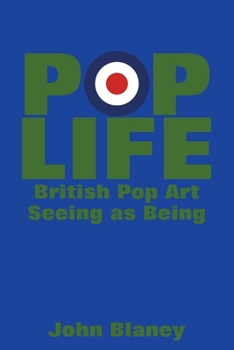
Pop Life: British Pop Art - Seeing as Being

How do images change the way societies imagine themselves? This book argues that British Pop Art did more than mirror the cultural transformations of post-war Britain. It investigated the visual world through which those transformations became imaginable. Working with the imagery of advertising, television, photography, magazines and popular culture, artists such as Richard Hamilton, Eduardo Paolozzi, Peter Blake, David Hockney and Pauline Boty explored how images shape identity, organise recognition and expand the horizons of social possibility. Through close readings of key paintings and collages, the book reveals British Pop Art as a form of visual enquiry. Blake assembles culture through relationships between images and objects. Hockney translates new ways of seeing into new forms of belonging. Boty reframes the visual languages of mass media, exposing the struggle over imagination itself. Bringing together art history, visual culture and cultural history, this study proposes a new interpretation of British Pop Art. It shows that these artists did not simply represent a changing Britain-they reorganised the visual imagination through which Britain came to understand itself. More broadly, it argues that images matter historically because they help shape what societies are able to recognise, imagine and ultimately become. John Blaney studied History of Art at Camberwell College of Arts and Goldsmiths (both in London) before taking up a post as collection manager at a museum of technology. He is the author of several books about popular music, including books about The Beatles and Pub Rock.
Customer Reviews
ThriftBooks ® and the ThriftBooks ® logo are registered trademarks of Thrift Books Global, LLC
