


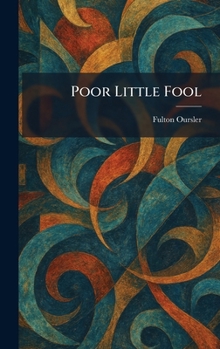
Poor Little Fool

"Poor Little Fool" is a sophisticated drama that probes the intricacies of modern relationships and the fragility of marriage during the 1920s. Written by Fulton Oursler, this work captures the restless energy and shifting social standards of the Jazz Age, offering a window into the hearts of men and women struggling to reconcile desire with duty.
The narrative centers on the consequences of infidelity and the emotional toll of secrets within a domestic setting. As the characters navigate their complex lives, Oursler examines the nuances of love, jealousy, and the societal pressures that define their choices. Through its vivid characterizations and sharp dialogue, the book presents a poignant look at the human condition during a period of significant cultural transition.
A notable example of American fiction from the late twenties, "Poor Little Fool" remains a relevant exploration of the timeless challenges found within intimate partnerships. Readers interested in the literary history of the early twentieth century will find this work a compelling study of the era's mores and the enduring complexities of the heart.
This work has been selected by scholars as being culturally important, and is part of the knowledge base of civilization as we know it. This work was reproduced from the original artifact, and remains as true to the original work as possible. Therefore, you may see the original copyright references, library stamps (as most of these works have been housed in our most important libraries around the world), and other notations in the work.
This work is in the public domain in the United States of America, and possibly other nations. Within the United States, you may freely copy and distribute this work, as no entity (individual or corporate) has a copyright on the body of the work.
As a reproduction of a historical artifact, this work may contain missing or blurred pages, poor pictures, errant marks, etc. Scholars believe, and we concur, that this work is important enough to be preserved, reproduced, and made generally available to the public. We appreciate your support of the preservation process, and thank you for being an important part of keeping this knowledge alive and relevant.
Customer Reviews
ThriftBooks ® and the ThriftBooks ® logo are registered trademarks of Thrift Books Global, LLC
